Shopping Cart

 0
0
Shopping Cart
Smart home living is becoming increasingly common across Singapore, from HDB flats to private condominiums. As technology becomes more accessible, homeowners are integrating digital solutions into everyday routines to improve comfort, efficiency, and convenience. This evolution is also part of a broader national direction. Under the Smart Nation initiative, Singapore continues to embrace technology to build a more connected, efficient, and sustainable society.
The living room, in particular, plays a central role in this shift. As a space used for relaxation, entertainment, and social interaction, it is often the first area where smart features are introduced. From lighting to climate control, these enhancements are designed to create a more seamless and responsive home environment.
For homeowners, adopting smart home solutions reflects a growing emphasis on smarter, more energy-conscious living that aligns with the country’s long-term vision. Curtains and blinds are no longer just decorative features. They are evolving into functional elements that can be automated and integrated into smart home systems, allowing homeowners to manage light, privacy, and indoor comfort more efficiently. Therefore, modern window treatments for living room spaces are becoming an important part of connected home planning.
As homes become more intelligent, window treatments are no longer viewed purely as decorative elements. They are now part of a wider system that supports daily comfort and energy efficiency. This section explains why modern window treatments for living room spaces are becoming part of smart home planning and how they work.
Modern solutions allow curtains and blinds to be automated, scheduled, or controlled remotely. This means you can adjust natural light, manage privacy, and reduce heat throughout the day without manual effort. Over time, these small adjustments contribute to a more comfortable indoor environment while supporting more efficient energy use.
By combining thoughtful design with smart functionality, smart home window automation helps homeowners achieve a balance between aesthetics and practicality. More importantly, they integrate seamlessly into how people live today, making everyday routines smoother while supporting a more connected, sustainable home.
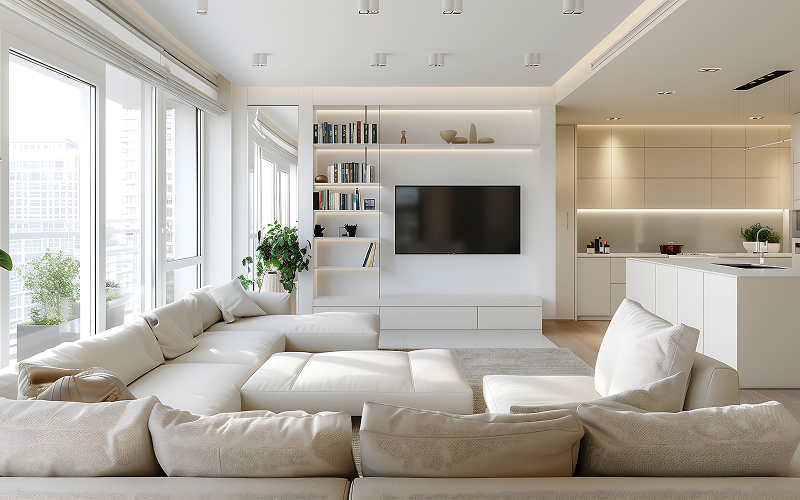
Smart window treatments are motorised, automated curtains or blinds that can be controlled remotely. These systems use built-in motors and control mechanisms to open, close, or adjust your window coverings with ease. They can be operated through a remote control, wall switch, smartphone app, timer, or compatible voice assistant.
In practical terms, they bring convenience to everyday tasks. A homeowner can close the curtains from the sofa, adjust blinds while watching television, or schedule them to move at specific times. These window treatments are especially useful for households that want comfort without adding complexity to daily routines.
They also support more consistent control. Instead of leaving curtains half-open or blinds unevenly positioned, smart systems can move smoothly and stop at selected positions. This helps create a neater visual appearance while improving control over glare, daylight, and privacy.
Traditional curtains and blinds rely on cords, chains, or manual pulling to operate. While functional, they require physical effort and can be less precise when adjusting light levels or positioning. For tall windows, wide window spans, or furniture placed near the window, manual operation can also become inconvenient over time.
Smart window treatments remove this limitation. With motorisation, movements are smooth, consistent, and can be adjusted to exact positions. This allows you to fine-tune how much light enters your space or how much privacy you want at any given time.
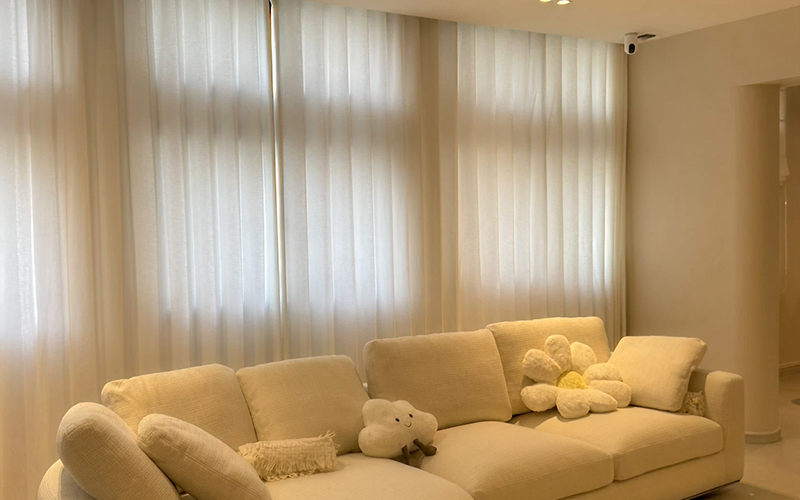
In addition, manual systems require you to be physically present to operate them, whereas smart systems can be controlled remotely or automatically adjusted based on your routine. This benefits homeowners who want their living room to feel ready when they return home.
Motorisation can also reduce wear caused by uneven pulling or repeated tugging. For households with children or elderly family members, removing cords and chains can also create a cleaner, safer, and more accessible setup. Children are less likely to pull on loose cords, while elderly family members can adjust window treatments without stretching, reaching, or applying physical force.
One of the key advantages of smart window treatments is how easily they integrate into your daily life. They can be kept simple with a remote control or connected to a wider smart home ecosystem for more advanced use.
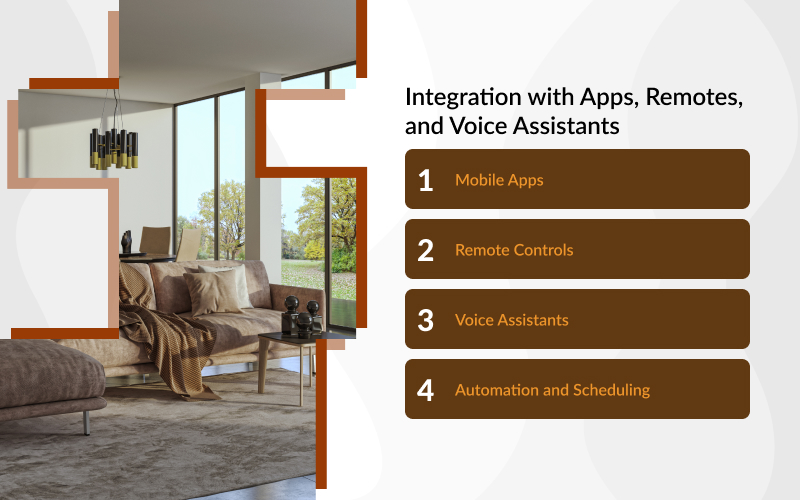
You can control your curtains or blinds directly from your smartphone, whether you are at home or away. This is useful for adjusting light levels during the day or ensuring privacy in the evening. With app control, homeowners can check whether their window treatments are open or closed without being in the room.
For example, if you are returning home late, you can close the living room curtains before you arrive. If the afternoon sun becomes too intense, you can lower the blinds even when you are away. These simple functions make home automation for curtains and blinds more practical for everyday use.
Dedicated remotes allow quick adjustments without opening an app, making them convenient for everyday use in the living room. This is ideal for family members who prefer straightforward controls or do not want to use a smartphone for every adjustment.
Additionally, a remote also keeps the system accessible for guests or elderly family members. Instead of navigating an app, they can open, close, or stop the window treatments with a simple button.
Smart window treatments can be connected to systems such as Google Home, Alexa, or Apple HomeKit. This enables you to control them through simple voice commands, adding another layer of convenience. For example, you can ask your system to close the curtains before watching a movie or open the blinds in the morning.
Voice control is especially useful when your hands are occupied or when you want to adjust multiple smart features together. In a smart living room design, window treatments can work alongside lighting, air-conditioning, and entertainment systems to create a more seamless environment.
You can programme your window treatments to open in the morning to let in natural light or close during peak afternoon heat. This not only enhances comfort but can also support energy efficiency in Singapore’s climate. When paired with air-conditioning, scheduled closing during hotter hours may help reduce heat gain in the living room.
Automated light control systems are also helpful for creating consistent routines. Your blinds can gradually open at a set time, or your curtains can close automatically in the evening for privacy. For households that value convenience, this can make modern window treatments for living room spaces feel more responsive and effortless.
There are several types of window treatments that can be integrated with smart systems. Each option offers a different look, level of light control, and suitability for various living room layouts. The most practical modern window treatments for living rooms include:
Roller blinds are among the most popular options due to their clean, minimal appearance. Designed with a single piece of fabric that rolls up neatly, they create a streamlined look that suits contemporary interiors.
From a functional perspective, roller blinds are well-suited to motorisation. Their simple mechanism ensures smooth, quiet operation, making them ideal for daily use. Whether you want to fully block light or gently filter it, roller blinds can be precisely adjusted to achieve the desired effect.
They are ideal for homeowners who prefer a clutter-free design while maintaining practical control over light and privacy. In smaller HDB living rooms, their compact profile helps the space feel visually lighter. For homeowners considering automation, motorised roller blinds can be a practical way to introduce smart functionality without compromising the room’s overall simplicity.
Korean combi blinds, also known as zebra blinds, offer a more dynamic approach to light control. Made with alternating layers of sheer and opaque fabric, they allow you to switch between filtered light and full privacy without fully raising or lowering the blinds.
When automated, this flexibility becomes even more convenient. You can easily adjust the fabric layers’ alignment to control brightness throughout the day. This makes them especially useful in living rooms where natural light is desired, but glare needs to be managed.
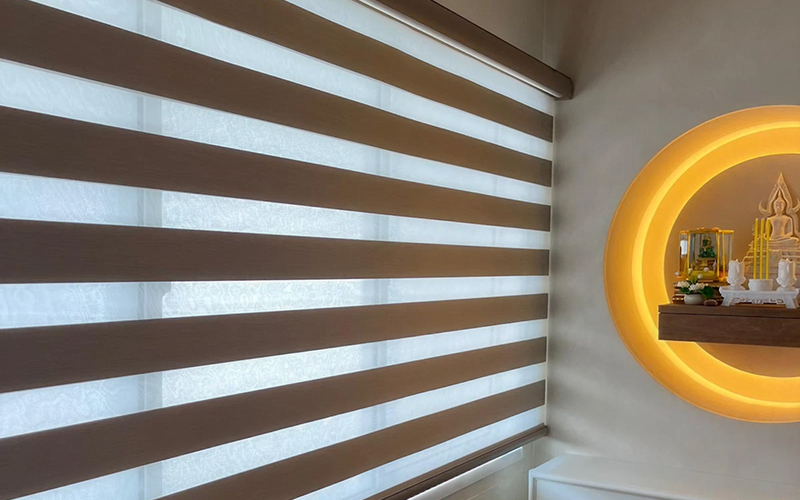
As part of modern window treatments for living rooms, combi blinds strike a balance between functionality and visual interest. This means they are suitable for both practical use and contemporary styling. Homeowners exploring Korean blinds in Singapore may find them useful for spaces that need privacy without making the room feel closed off.
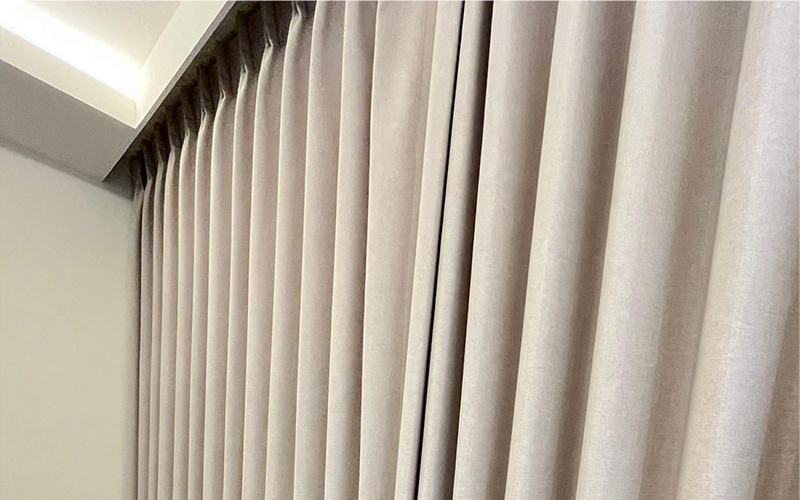
Curtains remain a timeless option, particularly for larger living room windows or spaces that benefit from a softer, more layered look. When motorised, curtains can be opened or closed smoothly across wide spans, which is especially useful for full-height windows or sliding doors commonly found in Singapore homes.
Blackout curtain options provide additional functionality by significantly reducing light and heat, making them ideal for living rooms that receive strong afternoon sun. At the same time, sheer curtains can be paired with blackout layers to create a more flexible setup, allowing homeowners to soften daylight during the day and increase privacy in the evening.
When this layered curtain system is automated, it becomes even easier to adjust the living room based on the time of day, sunlight levels, or activity. Sheer curtains can remain drawn to filter harsh light, while blackout curtains can close fully when privacy, glare reduction, or heat control is needed. This makes smart curtains a refined, functional choice for modern living room window treatments.
Honeycomb blinds, also known as cellular shades, feature a unique structure that traps air between their layers. This provides insulation benefits, helping to reduce heat transfer and maintain a more stable indoor temperature. Their cellular structure helps improve heat control while maintaining a clean, streamlined look, making them suitable for modern living rooms where both comfort and appearance matter.
When integrated with motorisation, these energy-efficient window coverings can be programmed to close during peak heat hours and open when natural light is more comfortable.
As one of the more performance-focused modern window treatments for living room settings, honeycomb blinds are well-suited for households that want better control over heat, light, and privacy.
There is no single best solution for every living room. What works well in a compact HDB flat may not suit a larger condominium with full-height windows. Choosing the right option starts with understanding the space and how it is used.
The size and structure of your living room play a key role in determining which option works best. In smaller HDB living rooms, space efficiency is often a priority. Compact solutions, such as roller or combi blinds, tend to work better because they sit close to the window and do not take up additional visual or physical space. This helps maintain a clean and uncluttered look.
In contrast, larger condo or landed living rooms with wider windows or full-height glass panels can accommodate more layered designs. Motorised curtains, especially floor-to-ceiling styles, help soften the space while maintaining a balanced and cohesive appearance.
Window size and ceiling height also influence your choice. Taller windows benefit from automated systems, as manual operation can be inconvenient. In these cases, smart window treatments improve both accessibility and overall usability.
In open-floor-plan layouts, window treatments affect how the living area visually connects with dining spaces or balconies. Choosing modern window treatments for living room spaces that align with the surrounding areas is the key to creating a more cohesive interior.
Both blinds and curtains can be automated, but they serve different design and functional purposes. Before deciding, homeowners should consider whether they prefer a compact, minimal appearance or a softer, more layered effect. The choice also depends on how much control they want over glare, daylight, and privacy.
Blinds are often associated with a minimalist and modern aesthetic. They offer precise control over light and are suitable for homeowners who prefer a streamlined look. For tighter living room layouts, motorised blinds offer a cleaner solution, as they operate smoothly without requiring extra side clearance or heavy fabric stacking.
Curtains, on the other hand, create a softer and more layered environment. They are ideal for larger spaces or for homeowners who prioritise warmth and visual texture. When automated, curtains provide smooth movement across wide areas, making them suitable for expansive living room layouts.
The choice ultimately depends on whether you prioritise functionality, aesthetics, or a combination of both. In many cases, modern window treatments for living rooms work best when the system is chosen around the room’s purpose.
Your daily routine should guide how your window treatments are set up and automated. A living room that receives strong morning light may need a different setting from one that faces the afternoon sun. Homes on lower floors or facing neighbouring blocks may also require more consistent privacy control.
For living rooms that receive strong daylight, controlling brightness and glare during the day is important, especially if you watch television or work from home. Adjustable blinds or layered curtains can help manage this without completely blocking natural light. This allows the room to remain bright while reducing discomfort.
In the evening, privacy becomes a priority, particularly in high-density residential areas. Smart scheduling allows your window treatments to close automatically at specific times, ensuring comfort without manual adjustment. This is especially useful for families who prefer routines that run quietly in the background.
It is also useful to consider how the space is used. For example, a living room used for entertaining may require flexible light control, while a more relaxed space may prioritise comfort and consistency. Aligning your window treatments with these habits ensures they support your lifestyle rather than disrupt it.
For homeowners comparing smart window solutions in Singapore, daily habits should guide the final decision. The most advanced system may not always be the most suitable. The best modern window treatments for living rooms should feel intuitive, easy to use, and relevant to the way the home functions.
Motorised systems generally fall into two categories, each with its own considerations. Understanding these differences early can help homeowners choose a setup that fits both the renovation stage and long-term maintenance expectations. This is essential because power access, window position, and future servicing can affect usability.
Wired systems are connected directly to a power source. They are typically more reliable for long-term use and are well-suited for new homes or major renovations where wiring can be planned in advance. However, installation can be more complex and may require coordination with other electrical works.
Battery-powered systems offer greater flexibility and are easier to install, making them suitable for existing homes. They eliminate the need for additional wiring, but require periodic battery replacement or recharging. This makes them attractive for homeowners who want smart functionality without major renovation.
The choice depends on your renovation stage, accessibility, and how much maintenance you are willing to manage over time. For instance, wired systems may be ideal for a newly renovated condominium, while battery-powered options may be more practical for an HDB flat that is already furnished. When selecting modern window treatments for living room spaces, the power source should be considered as part of the overall design.
For a smooth experience, your window treatments should integrate easily with your existing smart home setup. Compatibility affects how convenient the system feels in daily use. A setup that works well with your current devices will be easier to manage than one that requires separate apps and controls for every function.
This includes compatibility with platforms such as Google Home, Alexa, or Apple HomeKit. Seamless integration allows you to control multiple functions, such as lighting, air-conditioning, and window treatments, within a single system.
It is also important to ensure that the system supports the level of automation you need, such as scheduling or voice control. Choosing compatible solutions early helps avoid limitations later and ensures your smart home operates as a cohesive system.
Even with the right intentions, certain mistakes can affect how well your smart window treatments perform. Avoiding these helps ensure your modern window treatments for the living room setup remains practical, attractive, and reliable.
It is easy to be drawn to advanced features, but not all of them may be necessary for your daily routine. A system with many functions may seem impressive, but it can become frustrating if the features are rarely used or difficult for family members to understand.
Overcomplicating your setup with features you rarely use can make the system feel less intuitive. Instead, focus on solutions that directly support how you use your living room, whether that is automated light control, privacy, or convenience. For some households, simple remote control and scheduling may be enough.
The goal should be to simplify everyday living, not add unnecessary steps. Before deciding on a system, consider who will use it, how often it will be adjusted, and whether everyone in the household is comfortable with the controls. This ensures modern window treatments for living room spaces remain helpful rather than overly complicated.
Accurate measurements are essential for both aesthetics and functionality. Poorly fitted curtains or blinds can affect how smoothly the motorised system operates, leading to uneven movement or gaps in coverage. Even small measurement errors can affect light control, privacy, and the overall finish.
Professional measurement and installation help ensure that your window treatments function properly and look well-integrated within the space. This should be considered for large windows, bay windows, full-height glass panels, or irregular layouts. A precise fit also helps the system move more smoothly and reduces strain on the motor.
For modern window treatments for living room areas, fit affects the entire room’s appearance. Curtains that are too short or blinds that leave side gaps can make the living area feel unfinished. Proper planning helps ensure both smart functionality and visual quality work together.
All motorised systems require some level of maintenance, whether it is battery replacement, cleaning, or occasional servicing. While smart systems are designed for convenience, they still need to remain accessible enough for long-term care. This is often overlooked when homeowners focus mainly on design.
Failing to consider accessibility can make maintenance inconvenient, especially for high or large windows. Choosing a system that is easy to maintain ensures long-term usability and reduces disruption. For battery-powered options, charging access should be assessed before installation.
Cleaning is another practical factor. Certain fabrics, folds, or blind structures may require different care routines. When selecting modern window treatments for living room spaces, homeowners should consider whether the material and system are suitable for their lifestyle, especially in households with children, pets, or frequent cooking smells from open kitchens.
While design is important, window treatments must also perform well in everyday use. A beautiful fabric or sleek blind may not be suitable if it does not manage heat, glare, or privacy effectively. In Singapore’s climate, performance should be considered together with appearance.
A visually appealing option that does not effectively manage light, heat, or privacy may not meet your needs in the long run. Balancing both aesthetics and functionality ensures that your investment delivers both comfort and practicality. For example, sheer curtains may soften the room beautifully, but they may need to be paired with blackout layers if privacy and heat control are priorities.
Selecting the right modern window treatments for living rooms is only part of the process. The quality of the materials, the level of customisation, and the guidance you receive during planning and installation all play a crucial role in how well the final result performs in your living room. An experienced provider can help identify details that homeowners may overlook, such as window proportions, fabric weight, motor suitability, and control preferences.
At Jia Le Curtains and Blinds, every curtain and blind is designed with the understanding that no two homes are the same. Each piece is tailored to reflect how you live, whether you are setting up your first BTO or refining a modern condo space.
With over 25 years of experience, we combine technical expertise with a thoughtful, hands-on approach, including specialised local knowledge for challenging spaces common in Singapore’s older HDBs and modern condos. From selecting suitable materials to maintaining precise measurements and smooth integration with smart systems, every detail is considered.
What sets our experience apart is the focus on long-term value. Designs are crafted to be durable and sustainable, ensuring consistent performance over time while maintaining their appearance. At the same time, full customisation ensures that your window treatments adapt to your specific layout, lighting needs, and lifestyle preferences.
Yes, they are suitable for most HDB flats. Many options are compact and designed for standard window sizes. Battery-powered systems are especially practical as they do not require major installation or wiring.
No, basic functions like remote control can work without the internet. However, features such as app control, scheduling, and voice commands require a Wi-Fi connection.
Most motorised systems last around 5 to 10 years, depending on quality and usage. Proper installation and regular use help maintain smooth performance over time.
Smart window treatments bring together design, comfort, and technology to enhance the look and function of your living room. By automating light and privacy control, they make everyday living more convenient without requiring extra effort. They also help homeowners manage sunlight, heat, and privacy more consistently throughout the day.
At Jia Le Curtains and Blinds, homeowners and businesses can explore tailored custom curtains designed around Singapore’s climate, interior needs, and everyday living conditions. With our guidance on materials, measurements, and installation, modern window treatments for living rooms can be planned to support greater comfort, smarter control, and a more cohesive home environment.
Contact us to explore window treatments that suit your home, lifestyle, and daily routines.