Shopping Cart


 0
0
Shopping Cart
What Curtain Length Rules Are Worth Following?
Curtains are often chosen for their colour or fabric, yet their length is what ultimately defines how a space feels and functions. In many homes, curtain length is decided quickly or based on visual preference alone.
However, small differences in curtain length can affect both the overall appearance and practicality of a space. Curtains that are too short, too long, or unevenly measured may disrupt a room’s visual balance or cause unnecessary inconvenience over time. The most effective choices come from balancing visual appeal with practical living needs, especially in a climate where sunlight, heat, and ventilation are everyday considerations.
Let’s explore the most important curtain length rules homeowners should know, along with when it makes sense to adapt them.
Curtain length should always reflect how a space is used. Living rooms and bedrooms often benefit from longer curtains, as they create a more composed and cohesive look. These are areas where homeowners tend to prioritise comfort, relaxation, and visual continuity.
In contrast, utility spaces such as kitchens, service yards, or bathrooms typically require a more practical approach. Shorter curtains are often better suited here, as they allow easier access to windows, reduce obstruction, and support ventilation.
Instead of following a single standard across the entire home, thoughtful homeowners consider how each room functions. This makes it easier to achieve a balance between function and overall appearance.
Long curtains are often selected for the way they influence a room’s overall proportions. By guiding the eye upward, they help walls appear taller and reduce the sense of visual constraint, especially in more compact layouts.
In smaller rooms, this effect becomes even more noticeable when the curtains are kept simple and uncluttered. When installed closer to the ceiling and allowed to fall neatly towards the floor, they create a continuous vertical line that visually stretches the space. This subtle adjustment can make a room feel more balanced and less enclosed without requiring any structural changes.
For homeowners exploring curtains and blinds in Singapore, this approach often provides a clean and balanced foundation that works across different interior styles, from modern minimalist to more classic settings.
Short curtains are sometimes seen as less desirable, but this is not always the case. In many situations, they are the most practical option.
Windows that sit above built-in furniture, kitchen counters, or study desks often require a shorter length to avoid obstruction. In these setups, full-length curtains may interfere with daily activities or create unnecessary bulk around functional areas. Short curtains allow for easier access, better ventilation, and a cleaner interaction with surrounding fixtures.
They are also useful in spaces where windows are opened frequently, such as kitchens or service yards. A shorter length reduces the chances of fabric coming into contact with moisture, grease, or outdoor elements, making maintenance more manageable.
Another key consideration is that the final look should feel intentional. Curtains that fall at awkward or inconsistent lengths can make the room appear unplanned, even if the rest of the room is well-designed.
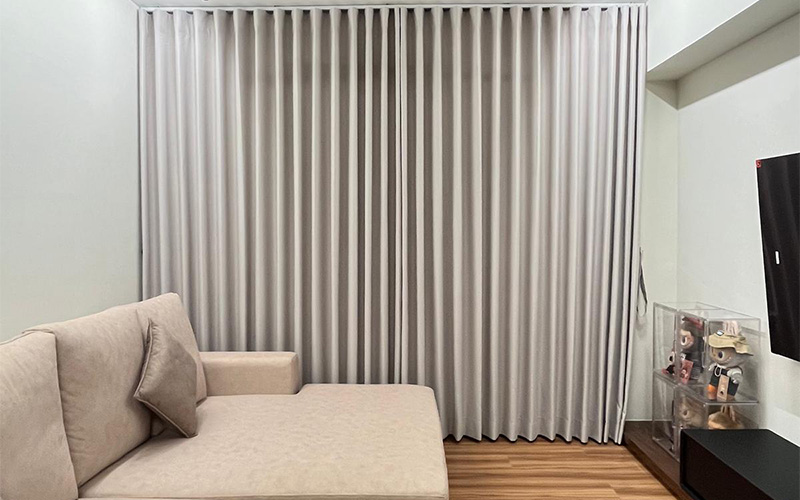
A clear decision always reads better. Curtains should either stop neatly at a practical point or extend confidently to the floor. Avoiding “in-between” lengths helps maintain a sense of clarity and purpose in the space.
This is where custom curtains can make a difference. Tailored measurements allow homeowners to achieve precise lengths that align with both design intent and functional needs, instead of just relying on standard, off-the-shelf sizes.
Curtain length does not exist in isolation. It works together with fabric type and curtain style to shape the overall look.
Heavier fabrics, such as blackout materials or thicker drapes, tend to look more refined when used as full-length curtains. Due to their weight, these curtains can fall smoothly to establish a more structured and polished appearance.
Lighter fabrics, including sheers, offer more flexibility. They work well in both short and long formats, depending on the design intent. Curtain styles also influence perception. For instance, ripple fold designs emphasise clean vertical lines, making length more visually prominent.
Practicality should always be part of the decision-making process. Curtains that drag excessively on the floor may look elegant in photos, but they can become inconvenient in daily life.
Homes with children or pets may require slightly shorter lengths to reduce wear and simplify cleaning. High-traffic areas may also benefit from controlled clearance to prevent fabric from collecting dust or becoming a tripping hazard.
By considering factors such as how often windows are used, the presence of children or pets, and the level of upkeep homeowners are comfortable with, curtain length can be tailored to suit daily routines. This keeps curtains easy to manage while maintaining comfort and functionality.
While these curtain length rules provide a helpful framework, there are situations where flexibility is necessary. Architectural features may limit the use of full-length curtains, particularly in spaces with built-in elements or unconventional layouts.
In other cases, functional needs such as ventilation, accessibility, or safety may take priority over visual preferences. There are also homeowners who prioritise ease of use and adaptability over formality. In such cases, shorter or adjusted curtain lengths may be the more suitable choice.
Ultimately, the most suitable decisions come from understanding the intent behind each rule.
Curtain length rules exist to guide decision-making, not to restrict it. When applied thoughtfully, they help homeowners create spaces that feel balanced, comfortable, and visually cohesive.
In Singapore homes, where sunlight, privacy, and heat control all play a part, curtain choices should respond to both environmental conditions and personal lifestyle needs. The goal is not perfection, but a solution that feels right for the space.
For homeowners who prefer a more consultative approach, Jia Le Curtains and Blinds provides guidance across a wide range of window treatments, including custom-made curtains. With experience across HDB flats, condominiums, and landed homes, the team focuses on helping homeowners choose curtain lengths that feel intentional, practical, and suited to their daily living.
If you are furnishing a new home or updating your current space, contact us to find your ideal window treatment solution.