Shopping Cart

 0
0
Shopping Cart
For many homeowners, deciding between dim-out vs blackout curtains can feel more confusing than expected. Both are commonly recommended by curtain providers, but the practical differences are not always clearly explained. This often leads to mismatched expectations, especially when homeowners assume that any thicker curtain will automatically block heat, reduce glare, and provide full privacy.
The truth is that neither option is universally better. The right choice depends on how each room is used, how much sunlight enters the space, and the level of privacy you need at different times of the day.
In this article, we explore dim-out vs blackout curtains so you can make a more informed decision. Instead of relying on assumptions or one-size-fits-all recommendations, you will understand how each curtain type supports comfort, privacy, sunlight management, and everyday living in Singapore homes.
Before comparing dim-out vs blackout curtains, it helps to understand what each option is designed to do. Many homeowners think the difference is simply “lighter curtain” versus “darker curtain”, but the distinction goes beyond colour and thickness. Fabric composition, lining, weave density, and installation all affect how well a curtain performs.
Both options can improve comfort, but they create very different indoor experiences. Dim-out curtains reduce brightness while keeping a soft sense of daylight, whereas blackout curtains focus on stronger light blockage and privacy. Understanding this foundation makes it easier to decide which type of window curtains fits each space.
Dim-out curtains are designed to significantly reduce incoming light without completely blocking it out. They soften and diffuse daylight, creating a comfortable indoor environment that still feels open and naturally lit.
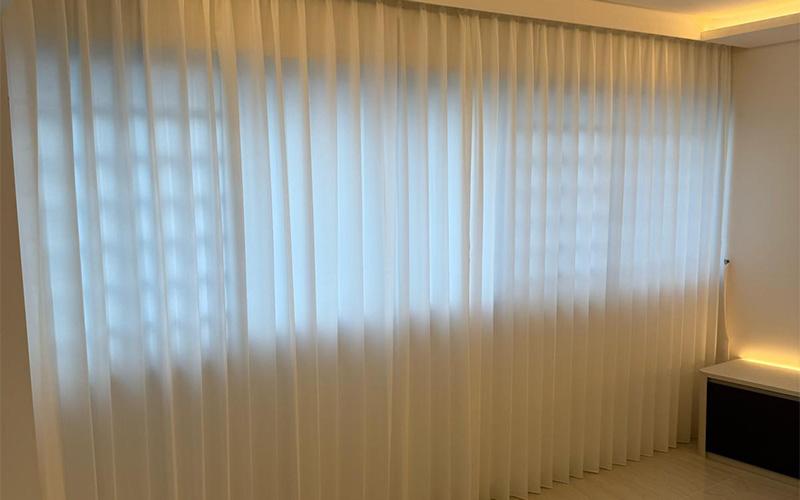
These curtains are typically made from softer fabrics or with a single lining that filters light rather than fully blocking it. They are sometimes layered together with blackout curtains for greater flexibility, but they can also be used on their own depending on the room’s needs.
Dim-out curtains generally reduce around 80 to 90% of external light, depending on the fabric, colour, and lining used. This level of light control is sufficient for everyday activities such as relaxing, reading, watching television, or taking daytime naps, while still allowing a gentle glow to enter the space. In practical terms, they help take the edge off bright daylight without making the room feel enclosed.
Dim-out curtains are ideal for living rooms and dining areas, where homeowners often want to enjoy natural light while reducing glare, heat intensity, and outside visibility. The space can still feel bright and welcoming, but with a gentler level of sunlight.
In bedrooms, dim-out curtains work well for those who prefer a lighter sleeping environment or like waking up to some natural brightness. They offer a softer alternative when comparing dim-out vs blackout curtains, especially if full darkness feels too enclosed.
They are also practical for home offices or media rooms where glare reduction is helpful, but total darkness may feel uncomfortable during the day. Dim-out curtains support better curtain light control by softening brightness while keeping the room usable.
Blackout curtains are designed to block out nearly all external light when properly installed and fitted. They create a dark and private indoor environment regardless of the time of day. For homeowners comparing dim out vs blackout curtains, blackout curtains are usually the stronger option when darkness, sleep quality, and privacy are priorities.
These curtains are commonly made using tightly woven, multi-layered fabrics or curtains lined with specialised blackout backing. Their performance comes from dense fabric construction and linings that prevent light from passing through. Unlike dim-out curtains, which filter daylight, blackout curtains are designed to block the sun.
High-quality blackout materials can also offer added benefits such as thermal insulation. In Singapore, strong afternoon sun often makes rooms feel warmer. Blackout curtains can help reduce the impact of direct sunlight on indoor comfort. However, their effectiveness still depends on fabric quality, window coverage, and installation.
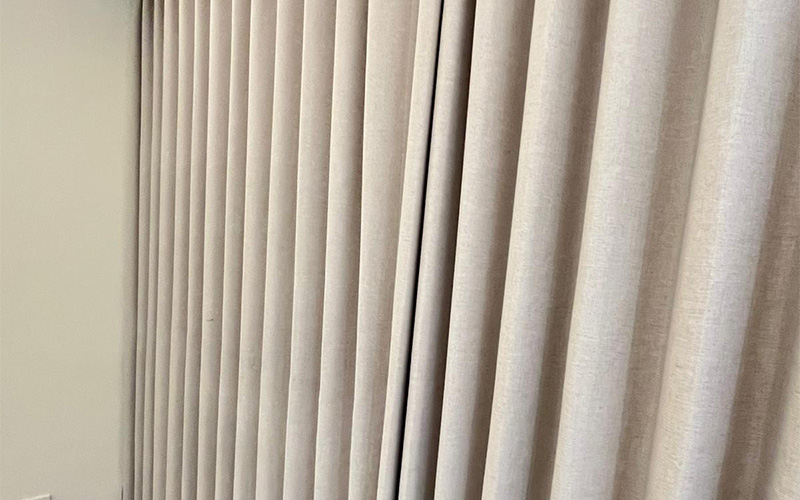
Blackout curtains are especially useful in spaces where light control directly affects comfort, rest, or functionality. They are commonly installed in bedrooms and master suites, where uninterrupted sleep is a priority. A room that receives early-morning sun or strong external lighting at night may feel uncomfortable without sufficient shading. In such cases, blackout curtains can create a more restful and private setting.
In nurseries and children’s rooms, blackout curtains can support consistent sleep routines by minimising daylight disruption. Young children may nap better in a darker room, especially during bright afternoons. This makes blackout curtains a practical choice for families managing daytime rest.
Home theatres and media rooms also benefit from blackout curtains, which help reduce glare and make screens easier to view. The same level of light control can be useful in home offices, especially when bright sunlight affects focus or creates reflections on screens. For shift workers or anyone who sleeps during the day, blackout curtains help make the room darker and more restful.
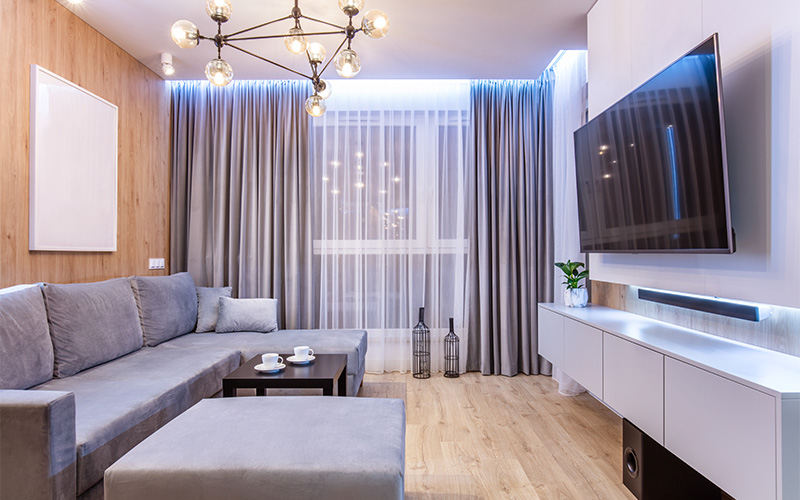
The best way to compare dim-out vs blackout curtains is to look at how they perform in real living conditions. A curtain may look suitable in a showroom, but its performance can feel very different once installed in a bright bedroom, west-facing living room, or lower-floor unit.
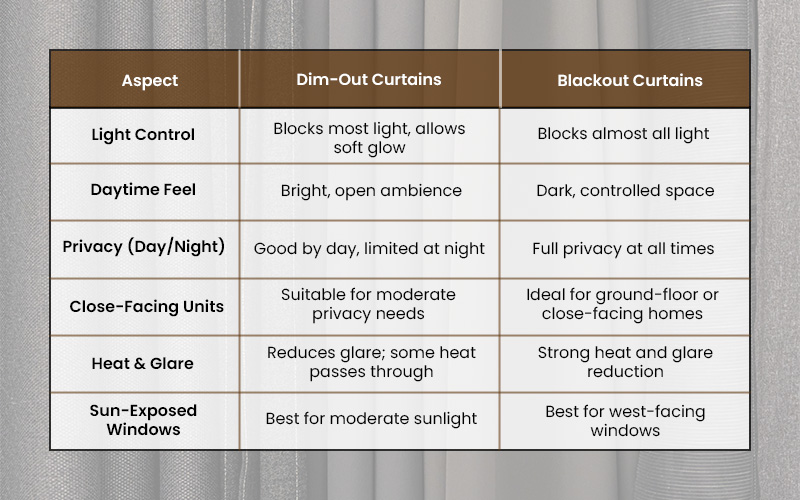
The following aspects explain how both options differ in everyday use:
Dim-out curtains provide partial light blockage, typically reducing incoming light by 80 to 90% while still allowing a soft glow into the room. This helps maintain daytime brightness and creates a more relaxed, open ambience. For homeowners who enjoy natural light but dislike harsh glare, dim-out curtains can feel more comfortable than fully darkening the room.
On the other hand, blackout curtains offer near-total light blockage, significantly darkening the space even during the day. This makes them suitable for bedrooms, media rooms, or daytime rest areas where excess light can affect sleep quality, concentration, or overall comfort.
Dim-out curtains offer good daytime privacy but may reveal silhouettes at night when indoor lights are on, particularly in close-facing units. In Singapore apartments, this can be a concern when windows face corridors, roads, or nearby residential blocks. During the day, dim-out curtains can reduce visibility from outside while still keeping the room bright.
For homeowners who prioritise curtain privacy, blackout curtains offer greater reassurance by preventing visibility from both inside and outside. This makes them especially useful for bedrooms, ground-floor homes, and apartments facing neighbouring blocks, where privacy may be a bigger concern after dark. While dim-out curtains may still work well in shared living areas, blackout curtains provide more complete coverage when stronger privacy is needed.
Dim-out curtains help reduce glare and soften sunlight but allow some heat to pass through, making them suitable for areas that receive moderate sunlight. They can make a living room or home office more comfortable without removing all natural brightness. This is well-suited for households that want to reduce glare on screens while keeping the room visually open.
Blackout curtains are more effective for rooms with west-facing or sun-exposed windows, which are common in Singapore and often receive strong afternoon heat. With thicker fabrics and specialised linings, they can better block direct sunlight and reduce heat gain. For homeowners seeking sun-blocking curtains, blackout options are usually recommended for intense sunlight.
Dim-out curtains tend to sit more lightly within a room, both visually and physically. Their softer fabrics allow the space to feel open, relaxed, and naturally bright, while still reducing harsh sunlight. For homeowners who want better light control without making the room feel heavy or enclosed, dim-out curtains offer a more subtle and easy-to-style option.
Meanwhile, blackout curtains tend to use heavier, multi-layered materials, creating a more substantial and structured appearance. These heavier curtain fabrics can give a room a more cocooned feel, adding a stronger sense of privacy, structure, and quiet enclosure.
Once you understand the functional differences between dim-out vs blackout curtains, the next step is choosing the right curtains for each space. A common mistake is using the same curtain type throughout the entire home, even though different rooms have different needs. A bedroom, living room, study, and nursery may each require a different level of light control and privacy.
Instead of identifying which curtain is better overall, it is more useful to ask what each room needs to feel comfortable. The right option should support your routine, your preferred brightness level, and how your home responds to sunlight. By factoring in light, privacy, budget, and aesthetics, you can make a more practical choice between dim-out vs blackout curtains.
When choosing between dim-out and blackout curtains, consider how much daylight you want in the room at different times of day. Some homeowners enjoy waking up to soft natural light, while others rest better in a darker, more enclosed setting.
Dim-out curtains are a good fit when you want to take the harshness out of daylight without losing natural brightness altogether. They help soften the room, reduce glare, and keep the space feeling open rather than enclosed. It is recommended to install them in living rooms, dining areas, and bedrooms where a gentle daytime glow feels more comfortable than full darkness.
Choose blackout curtains if you need near-total light blockage, such as for daytime sleep or to eliminate glare completely. This can be relevant for bedrooms, nurseries, home theatres, and rooms exposed to direct sunlight. If external light regularly affects rest or concentration, blackout curtains are likely the more suitable option.
Homes on lower floors or near neighbouring blocks often benefit from stronger privacy control. In these situations, comparing dim-out vs blackout curtains is not just about comfort but also about peace of mind. The closer your windows are to shared spaces or other units, the more important it is to have curtain coverage.
While dim-out curtains offer adequate daytime privacy, they may allow outlines to be seen at night in close-facing units. This does not mean they are unsuitable, but it does mean they should be used thoughtfully. They may work well in living areas during the day, but bedrooms may require additional coverage at night.
Blackout curtains, on the other hand, provide full privacy both day and night. They ensure no visible silhouettes when lights are on indoors. As such, they are often a practical choice for bedrooms, lower-floor homes, and units facing neighbouring windows. For households with ongoing privacy concerns, blackout curtains provide stronger and more consistent coverage.
Budget should be weighed alongside functionality rather than cost alone. A cheaper curtain that does not solve the room’s main issue may need to be replaced sooner. When assessing dim-out vs blackout curtains, the better value is the option that best meets the room’s actual needs.
Dim-out curtains are generally more cost-effective and suitable when full light blocking is not required. They can still improve comfort, soften sunlight, and enhance a room’s look without requiring the same level of fabric density. For larger living areas, this may be a practical way to balance performance and budget.
Due to specialised fabrics and construction, blackout curtains are typically more expensive. However, they are a long-term investment in comfort and performance. Their thicker lining and stronger light-blocking capability can make a noticeable difference in rooms where heat, glare, or privacy are persistent issues. For these spaces, the added cost may be justified. Homeowners who want added convenience may consider motorised blackout curtains for added convenience, especially for large, high, or frequently adjusted windows.
Fabric choice, colour, and texture play a part in how each option affects the overall look of a room. Neutral tones can make blackout curtains feel calmer, while textured dim-out fabrics can add visual interest without overpowering the space. The best dim-out vs blackout curtains choice should feel functional and visually aligned with the home.
Dim-out curtains are lighter in appearance and easier to integrate into a wide range of interior styles. They often suit homes that favour softness, brightness, and a more open look. Their fabric options also make it easier to coordinate with furniture, wall colours, and flooring.
The heavier look of blackout curtains can be an advantage in rest spaces, such as bedrooms. It helps create a quieter, more sheltered atmosphere. However, in smaller common areas, the fabric choice should be handled carefully so the curtains do not make the room feel visually cramped.
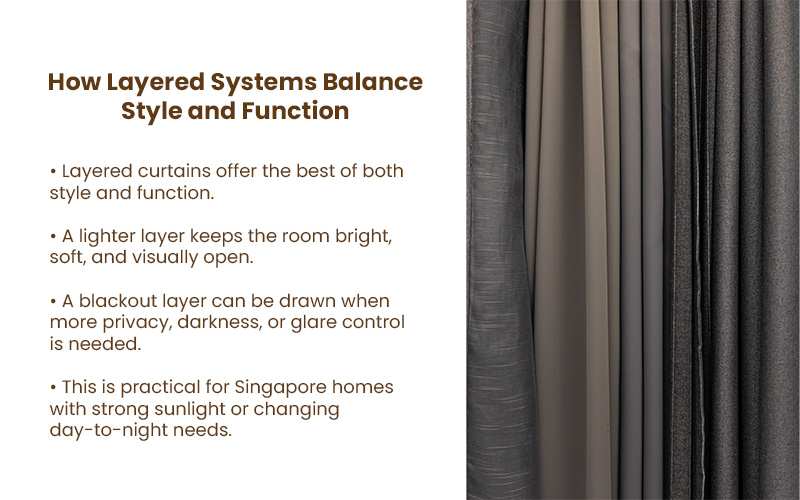
Many homeowners assume they must choose between dim-out and blackout curtains, but in practice, combining the two can offer greater flexibility and comfort. Instead of using blackout curtains all day or relying only on dim-out curtains at night, each layer can serve a different purpose.
Lighter fabrics add depth, texture, and visual interest to a space. Heavier blackout layers, on the other hand, can be discreetly drawn only when needed. They help keep rooms feeling open at other times.
Following this principle, dim-out curtains can be used during the day to soften sunlight while maintaining an open, comfortable ambience. Blackout curtains can then be drawn at night or when full darkness is needed for rest, privacy, or glare control.
Layered curtains are especially practical for bedrooms and living rooms. During the day, the lighter layer keeps the room bright but comfortable. At night, the blackout layer provides stronger privacy and darkness.
Additionally, layering is also useful for rooms with multiple functions. A home office may need soft daylight during working hours but stronger glare control for video calls or screen-heavy tasks. Meanwhile, the bedroom may require gentle light in the morning but full darkness during sleep.
This approach is especially useful in Singapore homes with strong daylight, changing privacy needs, or west-facing windows. A room that feels too bright in the afternoon may still feel pleasant in the morning, so having two layers gives you more control. It also allows the curtains to respond to different routines rather than forcing a single fixed lighting condition.
For homeowners still unsure about dim-out vs blackout curtains, layering can be a practical middle ground. You do not have to sacrifice natural brightness for privacy, or daytime ambience for nighttime darkness. Instead, the curtain system can adapt to the time of day and how the room is being used.
Choosing between dim-out vs blackout curtains is not just about fabric opacity. Fit, lining, installation, and how the curtains interact with your space all affect performance. This is where working with an experienced specialist makes a difference.
At Jia Le Curtains and Blinds, dim-out and blackout curtains are custom-made to suit each home or commercial space. Every project begins with on-site measurement and consultation, ensuring the curtains are tailored to your window dimensions, sunlight exposure, and privacy needs. This precise fit helps maximise light control, reduce heat and glare, and improve overall comfort.
As a curtain’s performance depends heavily on fit, a tailored approach is especially important. For homeowners looking for custom curtains, this helps create a better fit than generic curtain sizes. Proper measurements are essential when reducing light gaps at the sides, top, or bottom of the window.
Our full-service approach covers everything from quotation and fabric selection to fabrication and professional installation. This makes the process clearer for homeowners who may be comparing dim-out vs blackout curtains for the first time. Instead of choosing based only on fabric samples, you can consider how the curtain will perform in your home.
In most homes, achieving an absolute 100% blackout is difficult. While blackout curtains significantly reduce light, small amounts of light may still enter through gaps at the sides, top, or bottom of the window. Fabric quality, lining, track placement, and proper measurement all affect performance. Custom-made blackout curtains with proper installation come closest to full light blockage.
Sheer curtains allow natural light to pass through while providing minimal privacy. Dim-out curtains reduce light but still allow some brightness into the room, creating a softer atmosphere. Blackout curtains are designed to block most external light and provide the highest level of privacy, glare reduction, and light control.
Yes, dim-out curtains are suitable for many HDB flats, especially for living rooms or bedrooms that do not receive strong direct sunlight. They provide a balance between light control and openness, making spaces feel bright yet private. For bedrooms facing strong afternoon sun or nearby blocks, blackout curtains may be more effective.
There is no one-size-fits-all choice between dim-out vs blackout curtains. Dim-out curtains are ideal when you want softer daylight, a lighter visual look, and comfortable everyday privacy. Blackout curtains are better when you need stronger darkness, nighttime privacy, glare reduction, and better protection from direct sunlight.
The right curtain depends on how you live, not just how much light you want to block. A bright living room, a west-facing bedroom, a nursery, and a home office may all require different solutions. In many homes, the best answer may even be a layered system that combines both options for greater flexibility.
At Jia Le Curtains and Blinds, homeowners and businesses benefit from tailored, made-to -measure curtains designed for Singapore’s climate and living conditions. With full-service support from consultation and site measurement to fabrication and installation, we focus on balancing aesthetics, light control, and heat management without hard selling.
Still comparing dim-out vs blackout curtains? Contact us for tailored advice and curtains that perform well in your daily life.