Shopping Cart

 0
0
Shopping Cart
Chain, Cordless, Motorised: Which Blind Mechanism Should You Choose?
When choosing window blinds, most homeowners focus on colour, material, or design. However, blind mechanisms are just as important. The operating system determines how the blinds are raised, lowered, or controlled.
Some mechanisms rely on manual adjustment, while others introduce cordless or automated operation. Each option offers different levels of convenience, privacy, and visual simplicity, which can affect how well the blinds integrate into daily living.
This article explores the practical considerations behind different mechanisms, including window accessibility, household needs, and how frequently the blinds will need to be adjusted.
Chain-operated blinds remain one of the most widely used systems in residential spaces. A continuous-loop chain allows the blinds to be raised or lowered gradually, providing precise control over incoming light. This mechanism works through a simple manual pull system located on the side of the blind. Homeowners can adjust the height easily and stop the blind exactly where needed.
Chain mechanisms provide reliable control and are commonly used in roller or vertical blind systems. Many homeowners appreciate the familiar operation and the ability to adjust blinds gradually to manage glare and daylight.
However, households with young children may need to be mindful of chain accessibility. Over time, frequent pulling may also lead to gradual wear on the chain components, particularly in high-use areas.
Best suited for:
Cordless systems offer a streamlined appearance by removing visible chains or cords entirely. Instead, the blind is adjusted by gently lifting or lowering the bottom rail. This system not only reduces visual clutter around the window but also maintains simple functionality.
Cordless systems are commonly used in roller and Venetian blinds, where homeowners want a cleaner look around the window frame. The push-and-pull operation is intuitive, although the movement may feel slightly firmer compared to chain-operated systems.
Accurate measurement during installation is important to ensure the blind moves smoothly and remains balanced over time.
Best suited for:
Motorised systems introduce automated control through an internal motor integrated within the blind structure. The operation of motorised blinds is controlled using a remote control, wall switch, or smart home integration.
In homes with large windows or full-height glass panels, this mechanism provides clear practical benefits. Blinds can be adjusted effortlessly without needing to reach high or wide window openings.
Many homeowners choose motorised roller blinds for living rooms and open-plan areas where sunlight changes throughout the day. Automated control allows blinds to be adjusted quickly to manage glare and indoor comfort. Proper planning for power access or battery placement is usually required before installation.
Best suited for:
The most suitable mechanism depends on how the blinds will be used within the space, instead of current design trends. Before making a decision, homeowners may consider a few practical questions.
In spaces where sunlight changes frequently, such as living rooms or study areas, blinds may need to be raised and lowered multiple times. A mechanism that allows quick and convenient adjustment can make daily use more comfortable.
Windows positioned behind furniture, high above eye level, or spanning large panels may be harder to reach. In these situations, mechanisms that allow easier operation can make regular adjustments more practical.
Homes with young children or active pets may benefit from mechanisms that minimise exposed cords or chains. This helps create a safer environment while keeping the window area uncluttered.
Some homeowners prioritise smooth operation and precise control, while others prefer a cleaner appearance around the window. Understanding which factor matters more can help narrow down the most suitable option for the space.
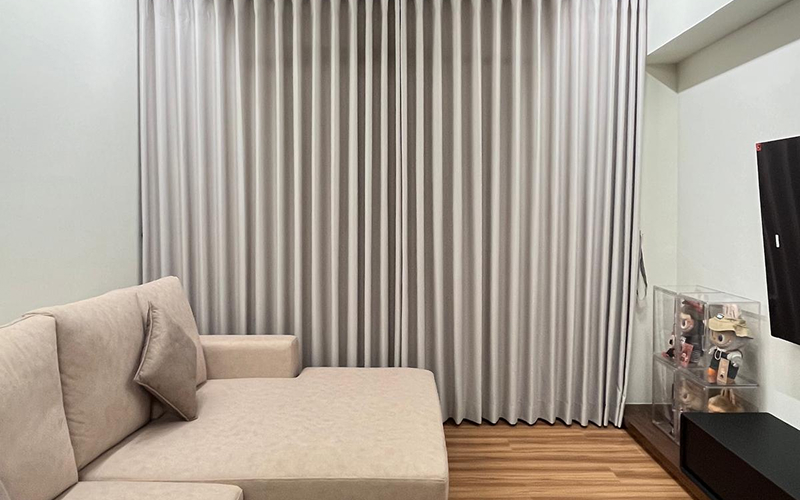
For example, a living room with large windows may benefit from motorised operation. These windows are often harder to reach and heavier to adjust, so motorised blinds provide greater convenience. These systems can also be paired with home automation setups that include smart curtains, for good coordination of lighting and privacy throughout the home.
On the other hand, smaller bedroom windows are typically within easy reach and use lighter blinds. As they can be adjusted comfortably by hand, chain or cordless systems are sufficient to provide simple manual control.
Regardless of the blind mechanism chosen, accurate measurement and installation play a major role in performance. Blinds that are precisely fitted are less likely to experience uneven movement or excessive strain on their components. Professional installation also helps ensure the system operates smoothly from the start.
At Jia Le Curtains and Blinds, window treatments are produced through a full-service process that includes site measurement, customised fabrication, and professional installation. We ensure each system is aligned with the window dimensions and the practical needs of the home.
Get in touch to learn more about our tailored window treatment solutions.