Shopping Cart


 0
0
Shopping Cart
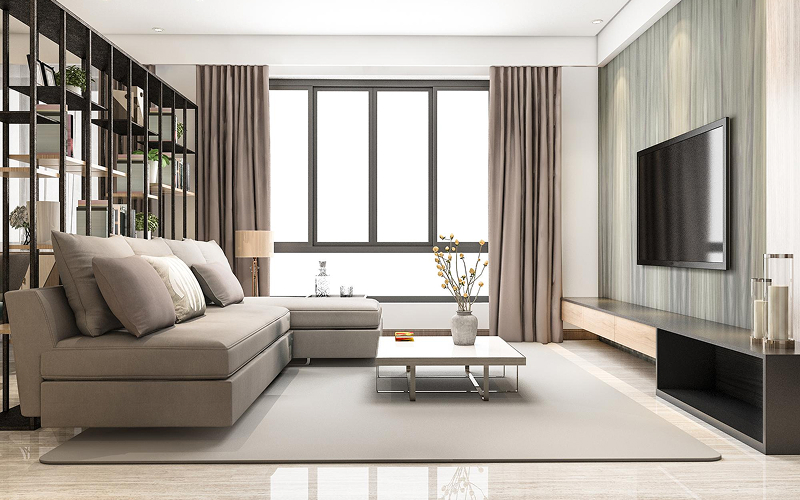
Curtains are among the largest and most visually dominant elements in a living room, often spanning wide windows and sitting at eye level. Because of this, the curtain style for living room design plays a significant role in shaping the overall mood, balance, and perceived quality of the space.
With the wide range of fabrics, textures, colours, and patterns available today, curtains offer immense flexibility in complementing different interior styles. However, achieving a polished living room is less about following trends and more about cohesion. A well-considered curtain style for a living room connects walls, furniture, flooring, and natural light into a cohesive whole.
This article explores how to thoughtfully select and adapt curtain styles across different interior themes to create a living room that feels intentional, balanced, and cohesive.
In a living room context, cohesive design refers to how all elements in the space work together as a unified whole rather than competing with one another. Curtains play a key role in this process, acting as a visual connector between walls, flooring, furniture, and natural light.
A poorly considered curtain style for a living room can disrupt even a well-designed interior. For example, heavy patterned curtains in a minimalist space can feel visually intrusive, while overly sheer curtains in a structured setting may appear incomplete.
Cohesion is achieved through restraint and consistency. This involves aligning curtains with existing textures, tones, and spatial proportions. When done well, the curtain style for the living room enhances calmness and clarity, creating a space that feels composed.
Understanding what defines a curtain style for a living room involves recognising how different elements interact with the overall space. Fabric, structure, and other factors can influence how curtains look, feel, and function within the room.
Curtain fabric selection should not be treated as purely aesthetic, as fabric is one of the most defining aspects of curtain style for a living room design. It determines how the space feels at first glance. Soft fabrics such as linen or textured weaves create warmth and approachability, while heavier materials introduce a sense of structure and permanence.
Visual weight also plays a part. Heavier fabrics tend to ground the space and naturally draw the eye, creating a sense of structure and presence. In contrast, lighter fabrics let natural light filter through more freely, helping the room feel brighter and more open.

The way curtains are constructed directly affects how they fall, move, and frame the space. Wave and ripple folds offer a fluid, understated look that feels relaxed and modern, blending naturally into contemporary spaces. On the other hand, pleated or tailored styles bring a sense of precision and structure, making them more suited to classic or upscale interiors.
Silhouette is also essential in shaping perception, determining whether the space feels relaxed or highly curated. In contemporary interiors, clean silhouettes help maintain visual clarity, allowing other elements in the space to stand out. Meanwhile, detailed folds bring texture and richness that complement more traditional settings. A soft, fluid drape can blur harsh lines and create a sense of ease, while structured curtains reinforce alignment and symmetry within the room.
Proportion plays a key role in maintaining proportion and balance in interiors, yet it is often overlooked in curtain design. Curtains hung closer to the ceiling visually increase room height, creating a more expansive feel. Full-height curtains help living rooms feel more cohesive and connected vertically.
Fullness also needs to be balanced carefully. Adequate fullness adds elegance and depth, allowing curtains to drape naturally. However, excessive fullness can feel heavy or visually crowded, especially in smaller spaces. The aim is to achieve a balanced drape that aligns with the room’s scale, allowing the curtain style to enhance the space without overpowering it.
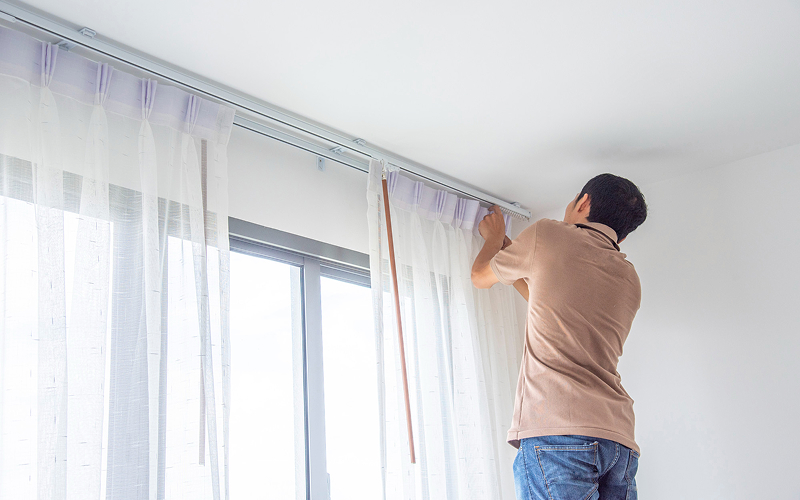
Different interior themes require different approaches to curtain styling. Understanding these nuances helps ensure the curtain style for the living room aligns with the overall design intent.
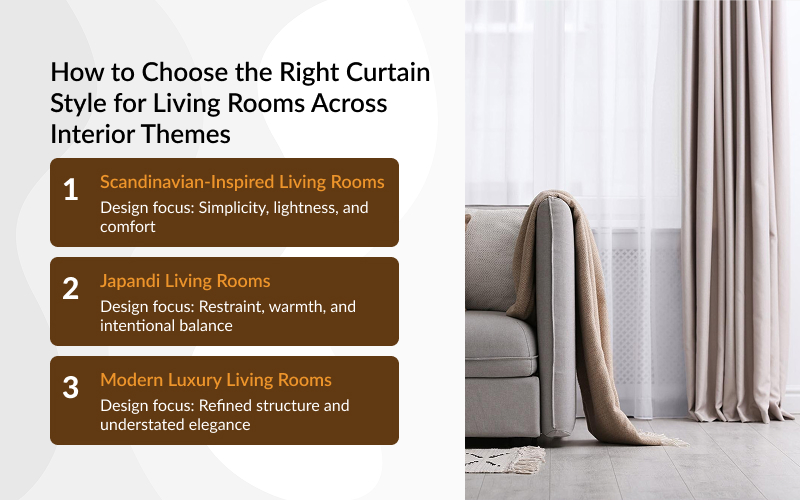
Design focus: Simplicity, lightness, and comfort
Scandinavian interiors prioritise clean lines, natural light, and functional comfort. Curtain styles should remain understated and visually light to support these principles.
Soft fabrics, such as linen or cotton blends, help maintain an airy feel, whereas neutral curtain palettes, such as whites, off-whites, and light greys, support visual calm. Subtle textures can add warmth without disrupting the minimalist aesthetic. Meanwhile, over-layering or heavy drapery should be avoided to preserve openness.
Design focus: Restraint, warmth, and intentional balance
Japandi design blends Japanese minimalism with Scandinavian softness, creating a calm and grounded environment. By combining the simplicity and restraint of Japanese interiors with the warmth and comfort of Scandinavian design, the space achieves clarity without feeling stark.
To support this balance, curtain styles should reflect intention, with minimal emphasis on decoration. Matte finishes and softly falling fabrics create a quiet sense of refinement, adding depth without drawing too much attention. Keeping curtain tones closely aligned with the walls and furniture helps the space flow naturally, allowing the room to feel cohesive, calm, and visually effortless.
Design focus: Refined structure and understated elegance
In modern luxury interiors, curtains function almost architecturally. Structured silhouettes and refined materials define the curtain style for the living room.
Deeper tones and heavier fabrics can be used to add presence and depth. However, these elements need to be incorporated with restraint to avoid overwhelming the space. When applied thoughtfully, it is the quality of the material and the precision of proportion that create a refined impact, without relying on excessive embellishment.
Layering is a key consideration when shaping a cohesive curtain style, as it brings together light control, privacy, and visual depth in a more flexible way. Instead of depending on a single curtain type, a layered approach allows the living room to shift naturally throughout the day while still maintaining a consistent overall look.
Day curtains are typically used as the inner layer, allowing natural light to filter through while softening the window’s appearance. They help keep the room well-lit while softening intense sunlight, especially in living rooms with large windows.
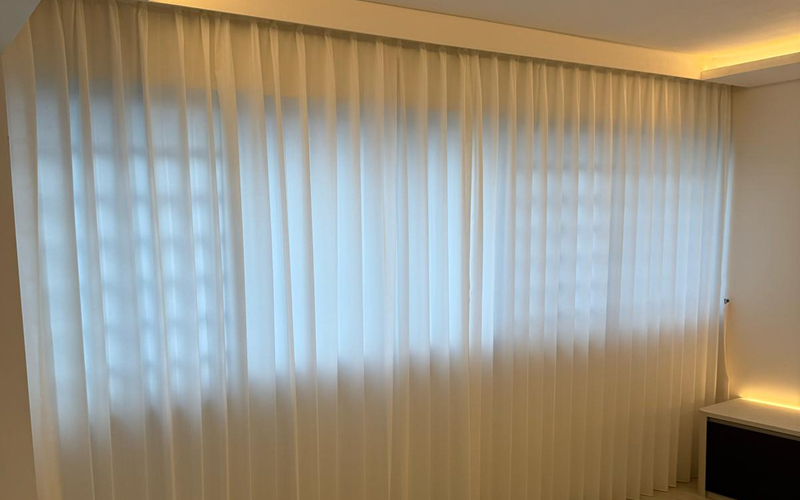
These curtains also support daytime privacy by diffusing visibility from the outside without fully blocking light. This makes them well-suited for living rooms that require flexibility between openness and subtle screening.
As a base layer, sheer curtains work best when paired with a heavier outer curtain that can block the sun, rather than being used in isolation. Without an outer layer, the overall curtain style for the living room may feel incomplete, particularly in the evening when privacy becomes more important.
Blackout curtains, often used as sun-blocking curtains, function as the primary outer layer in a layered arrangement. Their main purpose is to provide strong light blockage and privacy, especially in living rooms with full-height glazing or wide window spans.
In spaces exposed to direct sunlight or external lighting, this level of coverage helps maintain comfort by reducing glare and excess brightness. Options such as motorised blackout curtains further enhance usability, allowing easy light control without disrupting the overall look.
When used selectively, blackout curtains enhance flexibility without overwhelming the space. However, in smaller or minimalist living rooms, careful proportioning is essential. Excessive width, thickness, or contrast can introduce unnecessary visual heaviness, weakening the overall cohesiveness.
Dim-out curtains offer a more balanced alternative to blackout curtains while still functioning as an effective outer layer. Instead of completely blocking light, they reduce glare and soften brightness, making them suitable for living rooms where a gentler transition between day and night is preferred.
Dim-out curtains are particularly effective in spaces that prioritise ambience over complete darkness. They allow the room to retain a sense of openness and visual continuity, even when drawn, while still providing a level of privacy.
From a design perspective, dim-out curtains help prevent over-layering. By reducing the need for multiple heavy layers, they contribute to a more refined, cohesive curtain style in the living room.
Organza curtains are often used to introduce texture and visual softness within layered curtain systems. Unlike standard sheers, organza has a slightly more defined structure, which allows it to add dimension without significantly increasing visual weight.
Thanks to their slightly crisp texture, these curtains can catch and diffuse light differently from standard sheers. In living rooms with wide window spans, organza helps add dimension and richness, making the space appear more layered yet still open and balanced.
However, their effectiveness depends on scale. In smaller spaces, adding an extra layer, such as organza, may complicate the visual composition. In contrast, organza can elevate the overall look in larger living rooms by introducing subtle variation without disrupting cohesion.
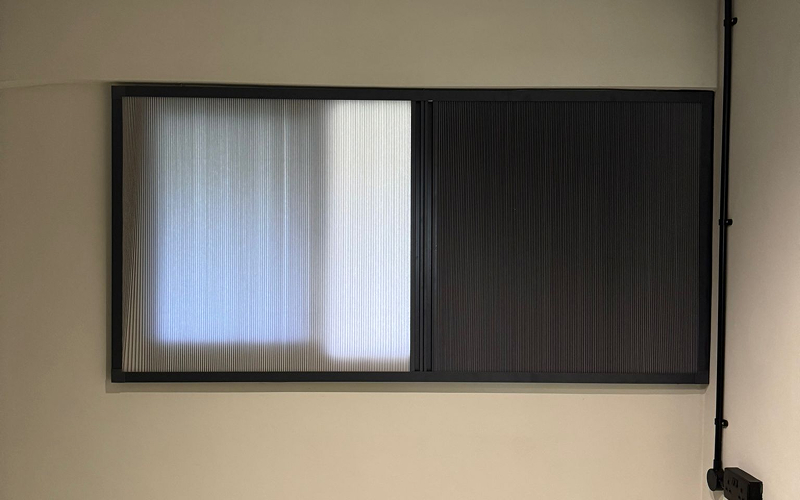
Unislat curtains offer a more structured, contemporary approach to window treatment. While they are typically applied as a single layer, they can also complement layered curtain systems in modern living rooms.
Their clean, vertical lines support minimalist interiors where traditional over-layering may feel excessive. In such spaces, Unislat curtains provide light control and privacy while maintaining visual order.
They are particularly useful when the goal is to simplify the curtain style for the living room without sacrificing function. Instead of relying on multiple fabric layers, they achieve clarity through structure.
While layering adds flexibility and depth, it can quickly become excessive if not carefully managed. The key is to enhance functionality while preserving visual clarity within the living room.
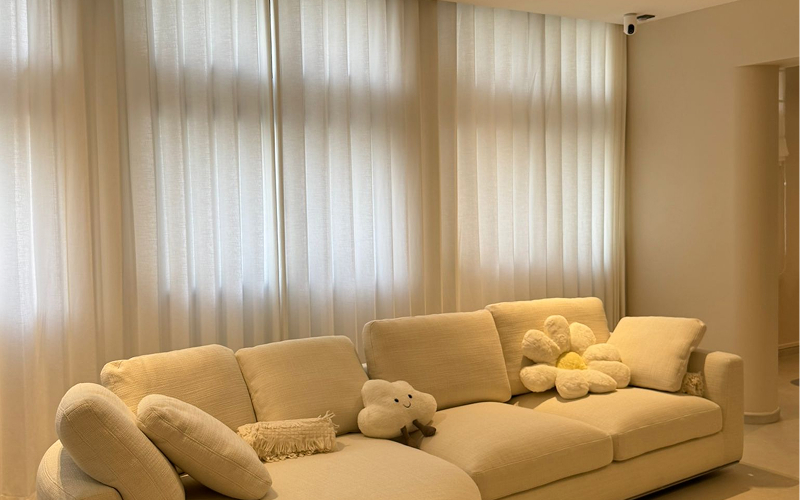
A well-balanced layered system typically starts with sheer curtains that soften daylight and maintain openness during the day. These should remain the dominant visual layer when natural light is present.
Heavier curtains should only be introduced when privacy or glare control is needed. This prevents unnecessary visual weight during daytime use. To maintain cohesion, both layers should stay within the same colour family. Strong contrast between layers can fragment the visual composition and disrupt the overall flow.
Cohesion in layering comes from restraint and clarity in how each element is introduced. Instead of relying on strong colour contrast, variation is better achieved through subtle differences in texture.
For example, pairing a smooth sheer with a subtly textured outer curtain creates depth without visual conflict. Mixing too many patterns or finishes within the same window treatment should be avoided, as it creates unnecessary visual noise. Both layers should also share a similar drape quality. When one fabric falls softly while another appears rigid, the inconsistency can weaken the curtain’s unified appearance.
Layering should always respond to the overall interior theme. The way curtains are layered needs to reflect the room’s design language, including its materials, colour palette, and level of visual complexity.
For example, in minimalist or Scandinavian interiors, layering should remain subtle and low-contrast to preserve a sense of openness. In Japandi spaces, layering works best when tones and textures are closely aligned, reinforcing a calm and grounded atmosphere.
In contrast, modern luxury interiors can accommodate slightly richer fabrics and more defined layering, as long as the silhouettes remain controlled and refined. Using made-to-measure curtains helps ensure each layer fits the space accurately, keeping the overall composition consistent with the interior theme.
Even well-designed living rooms can feel incomplete or disjointed when curtain choices are not carefully considered. Understanding common mistakes helps prevent disruptions to the overall curtain style for the living room.
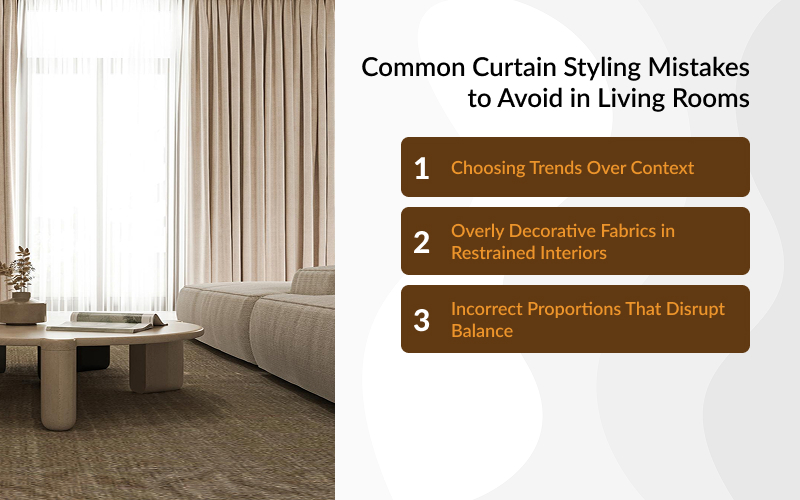
One of the most common mistakes is selecting curtains based on current trends without considering how they fit the space. While trend-driven fabrics, colours, or patterns may appear appealing on their own, they often fail to account for the room’s existing materials, proportions, and lighting conditions.
When applied without context, these choices can feel disconnected from the rest of the interior. For example, a bold patterned curtain might overpower a calm, minimalist living room, while overly sheer or lightweight fabrics may feel insufficient in a more structured setting. Over time, trend-based selections can also date quickly, making the space feel inconsistent as other elements evolve.
In calm, minimalist spaces, overly decorative fabrics can disrupt visual balance and draw attention away from the overall composition. These interiors rely on simplicity, clean lines, and controlled contrast, so introducing heavy patterns, embellishments, or high-sheen materials can feel out of place.
Instead of enhancing the space, such fabrics often create visual tension, making the room feel cluttered or inconsistent. They are better suited to interiors that already embrace ornamentation. In restrained settings, a simpler curtain style for a living room allows other elements to stand out while maintaining cohesion.
Proportion-related mistakes are subtle but highly impactful, often affecting how the entire living room is perceived. Curtains that are too short can visually lower the ceiling, while insufficient fullness may make them appear flat and unfinished. On the other hand, excessive fullness can introduce unnecessary bulk, making the space feel heavy and crowded.
As curtains occupy a large visual area, even small misjudgments in length, width, or placement can disrupt the room’s overall balance. A well-proportioned curtain style for the living room should align with the space’s scale, allowing the curtains to frame the room naturally without drawing disproportionate attention.
While style and silhouette define the visual direction, fabric quality determines how curtains perform over time. This includes how they move, filter light, and maintain their appearance through daily use. Jia Le Curtains and Blinds supports a more intentional approach to curtain selection for interiors, combining guidance with practical expertise.
Our wide fabric selection allows homeowners to explore options that suit different interior themes, from airy voiles and textured linens to heavier blackout weaves. This flexibility supports a consistent curtain style for the living room across various design approaches.
Material quality is equally important. Carefully sourced textiles balance durability, drape, and softness, ensuring curtains hang naturally while resisting wear. We believe this is especially relevant when selecting long-lasting curtain fabrics for everyday use.
In addition, we offer customisation support to tailor fabrics to your space. The colours, weights, and textures of our custom curtains are well-considered to sit well with the rest of your interior.
We also focus on functional performance, offering options that support light control, privacy, and insulation based on how your living room is used throughout the day. By considering your practical needs alongside design, you can achieve a setup that feels comfortable and efficient without compromising the overall look.
With our experience and understanding of both aesthetics and everyday use, we guide you towards choices that feel appropriate for your space. Our goal is to help you make confident choices that support a cohesive and lasting curtain style for the living room.
Curtain style should respond to the space rather than short-term trends. Trend-driven fabrics or patterns can date quickly or clash with existing materials. A cohesive curtain style prioritises proportion, texture, and tone so it continues to work even as furniture or décor changes.
Yes. Many curtain styles are adaptable when fabric choice, silhouette, and colour are adjusted. For example, a clean, full-height curtain can suit Scandinavian, Japandi, or modern luxury interiors depending on how texture, structure, and tonal depth are handled.
Curtain placement significantly affects how a living room feels. Curtains hung closer to the ceiling create the illusion of height and make the space feel more expansive. Incorrect height or length can visually compress the room and disrupt overall proportions.
Curtain styling plays a more important role in the living room than many homeowners realise. As one of the largest visual elements, the curtain style for the living room influences how light is filtered, how proportions are perceived, and how cohesive the interior ultimately feels.
When fabric, structure, and proportion are aligned thoughtfully, curtains become a quiet yet powerful anchor within the space. If you are looking to refine your living space, exploring well-fitted solutions, including custom curtains for living rooms, can help ensure your curtains not only look right but also function effectively for your daily needs.
Jia Le Curtains and Blinds supports more informed curtain selection for interior spaces, offering a wide range of fabrics suited to different design styles. Our custom-made curtains are crafted using quality materials that ensure durability and a natural, well-balanced drape. With tailored customisation and practical features such as light control and privacy, each curtain is designed to suit your space and everyday needs.
Contact us to create a cohesive and lasting curtain style for your living room.