

 0
0
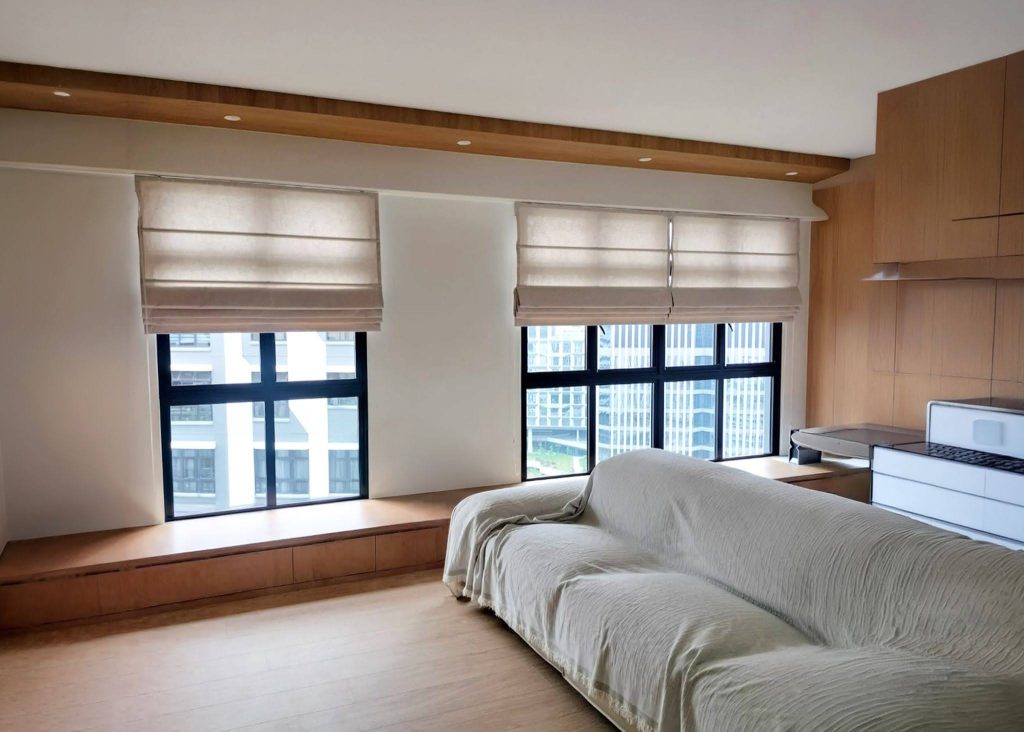
In Singapore’s climate, window furnishings do more than complete a room. They regulate sunlight, minimise glare, and protect privacy in high-density living environments. Matching blinds and curtains are no longer viewed as excessive when approached thoughtfully.
Many homeowners hesitate because they worry that layering may look bulky or mismatched. In reality, when proportions and materials are selected carefully, combining both treatments creates flexibility, comfort, and visual balance for HDB flats, condominiums, and landed properties alike. For homeowners who value both aesthetics and performance, the right pairing allows a space to transition naturally from bright mornings to restful evenings.
One of the main advantages of matching blinds and curtains lies in adaptability. Homes across Singapore experience strong daylight throughout the day, and a single layer rarely meets every requirement.
Sheer curtains soften incoming light while maintaining daytime discretion. Blinds can then be adjusted to manage brightness during peak hours, giving homeowners better light control and privacy without casting the room into darkness.
For example, roller blinds can be partially lowered to reduce glare on television screens, while Venetian blinds allow precise angling to redirect sunlight without blocking ventilation. In high-rise units facing direct sun, this combined approach improves comfort while preserving openness. For homeowners exploring practical window treatment ideas, pairing soft fabric panels with structured blind systems offers control without compromising ambience.
Consistent sun exposure makes temperature regulation a daily concern. South and west-facing windows can significantly raise indoor heat levels.
Positioning blackout blinds behind curtains improves insulation and reduces harsh brightness. Well-considered matching blinds and curtains ensure each element serves a clear purpose. Blinds provide precise adjustment, while curtains enhance coverage and soften the overall presentation.
Honeycomb can reduce heat transfer at the window surface, while heavier curtain fabrics create an additional barrier that limits direct sun exposure. Together, they help maintain a more stable indoor environment without over-reliance on air conditioning.
When thoughtfully paired, matching blinds and curtains can add dimension rather than crowd a room. Achieving this balance depends largely on restraint in colour and proportion.
A restrained colour palette prevents visual tension between layers. Selecting treatments within the same tonal family encourages cohesion, while subtle textural differences add interest. Neutral combinations also adapt more easily to changing furniture or décor.
In compact HDB layouts, this thoughtful pairing contributes architectural presence while maintaining a clean, uncluttered appearance. Slim-profile systems such as recessed roller blinds or Korean combi blinds help preserve visual lightness, while curtains provide framing and softness.
Before selecting colours or finishes, it is essential to consider how each room is used. Practical requirements should shape the overall decision. This prevents aesthetic preferences from overriding comfort and usability.
Achieving a cohesive result depends on compatibility between materials, mounting methods, and proportion. The objective is not to match everything exactly, but to ensure each component supports the other visually and functionally.
Working within a consistent colour range reduces visual distraction. Gentle tonal variation often produces a more refined outcome than bold contrast. This approach ensures the window treatment integrates naturally into the wider interior scheme.
Combining smooth blind surfaces with softly woven curtains introduces subtle depth. Texture adds character without overwhelming the space, allowing the window area to enhance rather than dominate the room.
Blinds fitted neatly within the window recess can be paired with fabric layers installed above for a structured finish. Accurate measurement is essential to ensure proper alignment and fluid operation. Homeowners who value cohesive detailing frequently select custom curtains so that the fabric scale and fall complement the selected blind mechanism. Proper track positioning also prevents fabric obstruction and ensures smooth daily operation.
Different spaces call for different priorities. Maintaining consistent tones across rooms establishes unity, while material variation supports functional needs. This approach ensures the home feels cohesive without repeating identical materials throughout. Well-planned matching blinds and curtains ensure each area performs appropriately without disrupting the overall design narrative.
Living spaces benefit from versatility throughout the day. Sheer curtains allow natural light during gatherings, while adjustable blinds moderate brightness when necessary. This combination supports openness while retaining a sense of control. The result is a room that feels inviting yet adaptable. Motorised systems can also be integrated for convenience, allowing homeowners to adjust multiple panels smoothly with minimal effort.
Bedrooms demand stronger light management. Blackout blinds paired with curtains help create a restful setting by limiting external illumination and ensuring nighttime privacy. Proper installation and adequate overlap are critical to performance. Choosing solutions based on effectiveness rather than appearance alone promotes consistent comfort. In condominiums with close neighbouring blocks, layered systems also minimise visibility from adjacent units.
Functional areas require materials that withstand humidity and regular use. In kitchens or studies, streamlined blind systems are often more suitable due to ease of maintenance. Curtains may still be incorporated for continuity, but durability remains central. Approaching window treatments from a usage perspective supports long-term satisfaction. Moisture-resistant blinds such as aluminium Venetian blinds or coated roller fabrics are typically more practical in these environments.
For precise fitting across varying window dimensions, many homeowners opt for made-to-measure blinds to ensure accurate alignment and smooth operation.
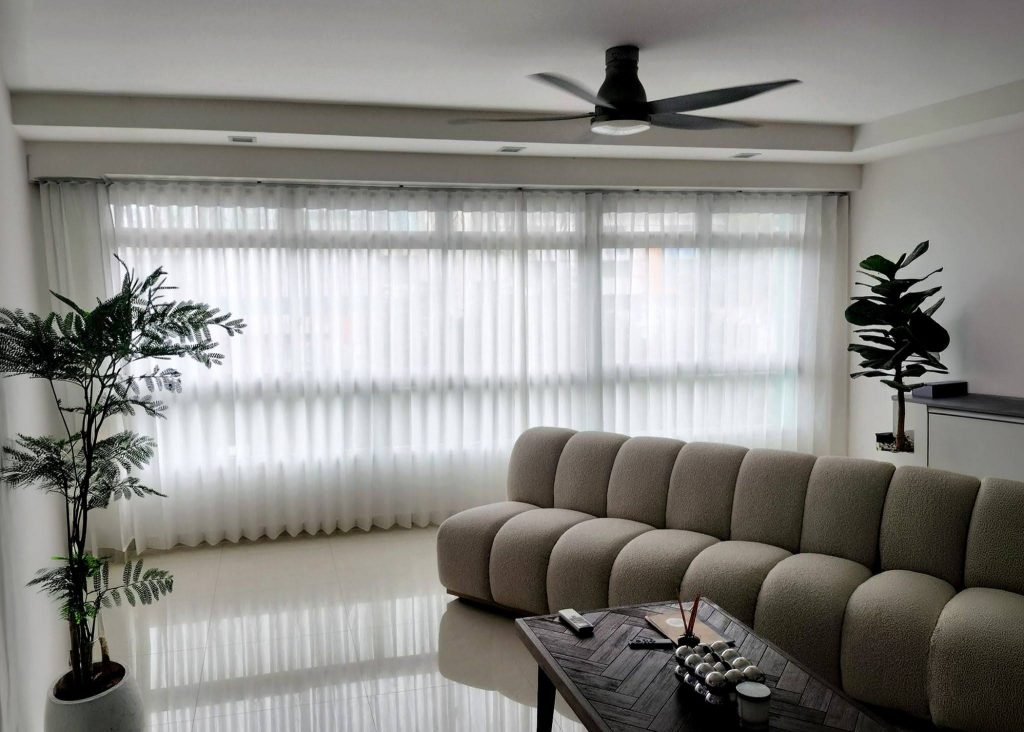
In dense residential developments, neighbouring units are frequently positioned nearby. Coordinated window coverings offer a structured response to changing privacy needs.
Sheer panels allow filtered daylight while maintaining daytime coverage. In the evening, blockout blinds or heavier drapes provide complete enclosure. Dual-track configurations enable independent adjustment of each layer, allowing residents to respond easily to shifting light conditions. This flexibility reflects the practical considerations of curtains and blinds in Singapore homes, especially where sun exposure is strong, and neighbouring blocks are positioned nearby. Layering also prevents the need to keep curtains fully drawn during the day, which can otherwise make interiors feel closed off.
Standardised solutions rarely account for varying ceiling heights, window recess depths, or sun exposure patterns common in local properties. Accurate site measurement and fabrication ensure that combined treatments align correctly and function reliably. This is particularly important when incorporating motorised tracks or smart systems.
Customisation also supports long-term performance by managing heat gain and reducing interior fading. Because window sizes, wall finishes, and ceiling clearances vary from unit to unit, precise measurements help prevent gaps, uneven stacking, and light seepage. Fabric weight, blind mechanism, and mounting position must work together for optimal results.
For homeowners who prefer measured, consultative guidance, Jia Le Curtains and Blinds provides recommendations grounded in proportion, material suitability, and climate responsiveness. With in-house expertise in both blinds and curtain fabrication, JLT ensures that layered solutions are planned holistically rather than treated as separate installations.
Layered window treatments perform best when proportion, material selection, and sun exposure are assessed together rather than separately.
Arrange an on-site consultation with Jia Le Curtains and Blinds to evaluate your window dimensions, sun exposure, and layout before deciding on a layered solution.