Shopping Cart


 0
0
Shopping Cart
Curtain Colours for North vs West-Facing Rooms: What Should You Choose?
Choosing the right curtain colours is not just about matching your sofa or wall paint. Natural light also plays a key role in how colours appear and perform throughout the day. A shade that looks perfect in a showroom can feel completely different once installed, simply because of how sunlight enters the room.
Understanding whether your room faces north or west can help you make better decisions. It allows you to manage glare, reduce heat and create a space that feels comfortable at all times.
Follow this guide to understand how light direction affects colour options and explore practical ideas for both orientations.
Natural light is not constant and changes in tone and intensity depending on the time of day and the direction your windows face. Morning light tends to be softer and cooler, while afternoon light is stronger, warmer and more intense. As a result, curtain colours can appear brighter, duller or more saturated depending on the level of exposure.
Without considering orientation, many homeowners end up choosing colours that feel too harsh, too dark or simply out of place after installation. In Singapore, sunlight is strong and consistent throughout the year. This can affect both comfort and how the space looks and feels throughout the day.
North-facing rooms receive indirect daylight throughout the day. The light is more even and diffused, creating a calm and consistent atmosphere. However, these spaces can sometimes feel slightly cooler or dimmer compared to other orientations.
As the light is softer, the goal is to introduce warmth and brightness without overwhelming the space.
These choices help create a more inviting and comfortable environment, especially in living rooms and bedrooms.
In north-facing rooms, where natural light is softer and more diffused, colour choices need to be handled carefully. As these spaces do not receive strong direct sunlight, certain shades can unintentionally make the room feel colder, flatter or less inviting.
Consider the quality of light in north-facing spaces to prevent a room from feeling dull. The key is to prioritise warmth and balance in your selection.
West-facing rooms experience some of the most intense lighting conditions in a home, particularly in the afternoon and early evening. As the sun lowers, direct sunlight enters at a stronger angle, creating bright glare and noticeable heat buildup. Because of this strong exposure, colours in west-facing rooms tend to appear warmer, brighter and more saturated than expected.
Here, the focus shifts from brightening to controlling light and heat.
Some homeowners consider using blackout curtains to manage both glare and heat in Singapore’s west-facing rooms. These curtains help reduce the intensity of direct sunlight entering the space, improving comfort during the hotter parts of the day. They also support better temperature control and can enhance privacy.
Sunlight is often strong and direct in west-facing rooms. Certain curtain choices can make the space feel overly bright, uncomfortable or visually overwhelming. To maintain better light control and balance, it is important to avoid these options:
If your goal is to reduce heat and glare, consider pairing colour choices with functional options such as sun-blocking curtains.
Natural light in a room shifts throughout the day, which can affect how a space looks and feels. To maintain comfort and visual balance, here are some tips to help you manage changing lighting conditions effectively.
As natural light changes throughout the day, a single curtain solution may not always provide the right balance of brightness, privacy and comfort. Through layering, you can adjust your curtains based on the time of day and level of sunlight.
Layering also allows you to combine aesthetics with function. For example, a light neutral sheer can be paired with darker outer curtains to block strong sunlight when needed.
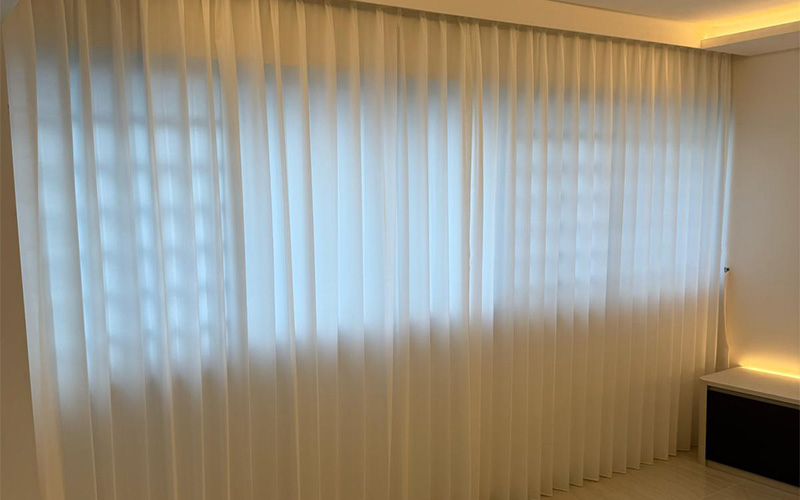
Curtain colour is not only influenced by lighting, but also by the type of fabric used. Even when the colour remains the same, its appearance can change significantly depending on the material, texture and thickness of the fabric.
The same shade may look richer, softer or more muted based on how it interacts with light. Understanding this helps ensure that your curtain colours achieve the intended effect once installed.
In west-facing rooms, thicker fabrics are often preferred to reduce heat and glare. In north-facing rooms, lighter fabrics can help maintain brightness while still adding warmth through colour.
Selecting the right curtain colours involves more than just choosing a shade that looks good on its own. Factors such as lighting, room orientation and existing interior elements can all influence how the final result appears once installed.
Take a few practical steps before making a decision to avoid mismatched tones or disappointing outcomes.
Take time to observe how natural light enters the room at different hours. Notice how the space feels in the morning, afternoon and evening, as lighting intensity and direction can change significantly.
Always place curtain fabric samples directly against your walls, flooring and existing furniture. Colours can look very different depending on surrounding tones and textures, so viewing them in your actual space provides a more accurate representation. This step helps prevent mismatched combinations and ensures a cohesive overall look.
Think about the room’s function and how much light control you need. For example, bedrooms may benefit from a curtain to block the sun for better rest, while living areas may prioritise a balance between natural light and privacy.
While trending colours can be appealing, they may not always suit your room’s lighting conditions or orientation. Instead of following short-lived styles, focus on colours that enhance comfort and work well with your space over time.
Singapore’s climate makes curtain selection more than just a design decision. Heat, humidity and strong sunlight all influence how a space feels. Thoughtful choices allow your curtains to do more than just look good. They help regulate light, improve comfort and create a space that feels right throughout the day.
For homeowners who want personalised guidance, it is recommended to work with a window treatment solution provider that understands both design and function. At Jia Le Curtains and Blinds, we offer consultative support tailored to Singapore homes, from colour selection, guided by the specific lighting and room orientation, to fabric choice and installation.
With custom-fit solutions and a wide range of styles, including sheer, day and night and motorised options, curtains can be designed to suit both your space and lifestyle. Let us help you choose the right curtain shade based on the lighting conditions of your space.
Get in touch with us to discuss your needs.