Shopping Cart

 0
0
Shopping Cart
How to Improve Your Space at Home With DIY Curtain Tiebacks?
Curtain tiebacks are a simple yet effective way to transform how a space feels throughout the day. By gently pulling curtains aside, you easily let more natural light into your space and open up your view. This small adjustment helps create a softer and more inviting atmosphere without changing your entire window treatment.
If you prefer practical, low-commitment upgrades when styling your curtains and blinds, DIY curtain tiebacks are an easy place to start. They do not require major changes or professional installation, but still noticeably improve how your space looks and feels.
Looking to refresh your space? This article explores simple and creative curtain tieback ideas you can try at home to enhance both style and function.
Using leftover curtain fabric is one of the most seamless ways to create tiebacks. This could come from previous alterations or excess material from your original installation. As the tiebacks are made from the exact same fabric, they carry the same colour tone, texture, and finish as the curtains. This means there is no visible contrast or mismatch when the curtains are pulled back. Instead of standing out as a separate accessory, the tiebacks visually “disappear” into the curtain, allowing the folds and drape to remain the main focus.
This method works particularly well for sheer or lightweight day curtains, as only a gentle hold is needed to gather the fabric neatly. With custom curtains, it is best to avoid tying them too tightly, so that it does not crease or place unnecessary stress on the fabric. A relaxed loop can maintain the curtain’s natural drape while still achieving the desired light control.
Soft rope or cotton cord tiebacks add a gentle layer of texture without drawing attention away from the curtains. Their natural look brings visual interest, making them ideal for interiors that lean towards modern, cosy, or relaxed styling.
In these spaces, materials and textures often take priority over bold decorative elements. The softness of rope or cotton blends easily into the overall setting, keeping the curtains more connected to the room.
For medium-weight curtains, these tiebacks are suitable because they only require a gentle hold to gather the fabric. Given Singapore’s humid conditions, opting for a smooth and well-finished cord helps minimise friction and reduce wear over time.
Magnetic tiebacks offer a practical and flexible solution for homeowners who prefer fuss-free adjustments. Since there is no need for drilling, they can be installed, removed, or repositioned easily. This makes them a great option for renters or those who are still refining their interior layout and want the flexibility to make changes along the way.
They work best with lighter curtains or sheer layers, where the magnets can hold the fabric comfortably without pulling or shifting. This keeps the folds neat and allows the curtains to drape naturally, while still giving you a clean, pulled-back look.
However, careful placement is key to ensure that the folds are gathered evenly. As a general guide, position the tieback around one-third up from the bottom of the curtain, then adjust slightly based on how the fabric falls. Step back and check both sides to see if the folds look balanced. Take a moment to make small changes to the height or tightness if needed.
Scarf-style tiebacks involve loosely looping a long strip of fabric around the curtain rather than securing it tightly. As the fabric is not pulled taut, the curtain may fall in gentle, relaxed folds, but not be tightly gathered in one spot.
This gives the window a more effortless look, where the tieback feels like part of the curtain. It also enables light to filter in more gradually, creating a gentler transition between open and closed, helping the space feel brighter but not overly exposed.
This approach complements ripple fold curtains well, keeping the natural wave pattern visible. It is most effective when curtains are only partially opened, which is often the case in Singapore homes where maintaining a degree of privacy is important.
Decorative tiebacks using rings, belts, or repurposed accessories can add a subtle focal point to your window area. These options give you more room to get creative while still serving a practical purpose.
A small detail like this can enhance feature windows or secondary spaces without feeling too bold or overpowering. It adds a subtle point of interest and keeps the overall focus on the space at the same time.
However, it is worth paying attention to the material you use. Surfaces that are rough or have sharp edges can gradually catch on the fabric, potentially leading to fraying or wear over time. This matters more for delicate or layered curtains, as the exposed surfaces come into contact with the tieback more often.
Temporary tiebacks using S-hooks or over-track attachments are useful for homeowners who want to test different styles before committing to a permanent solution. These can be easily adjusted or repositioned depending on your needs.
This option is helpful when you are experimenting with how tied-back curtains change the way light enters the room and how the space feels overall. Minor adjustments in position can affect brightness, openness, and even how spacious the room appears. So, having the freedom to test different placements can help you find what works best for your layout.
It also gives you the flexibility to try different heights and positions without making any permanent changes to your curtain system. For new homeowners or those still furnishing their space, this makes it easier to refine both function and style over time.
Before introducing any DIY tieback, consider how your curtains are designed to function. Curtain weight, fabric type, and lining all influence how the material responds when gathered.
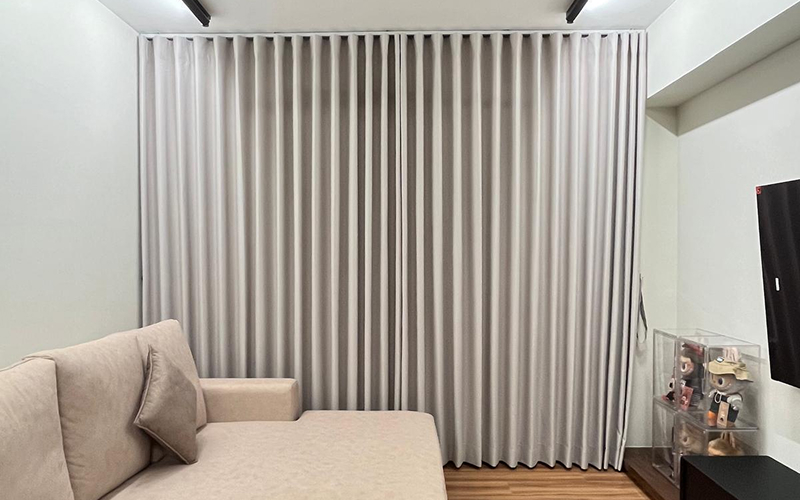
Avoid excessive pulling, especially for blackout or lined curtains, as this can affect how they hang over time. Testing different tieback heights is also helpful in achieving balanced proportions. Positioning that is too high or too low may disrupt the visual flow of the curtain.
It is also worth noting that some curtain styles are designed to hang best when left untied. In such cases, tiebacks should be used sparingly and mainly for functional purposes rather than as a permanent styling element.
DIY tiebacks are most effective when used for daytime adjustments. For sheer or secondary curtain layers, these work well since a flexible hold is often more suitable than a structured one.
In Singapore’s climate, where sunlight and heat can be intense, adjusting curtains throughout the day helps maintain indoor comfort. Tiebacks allow you to control glare while still letting in natural light, creating a balance between brightness and privacy.
They are also a practical solution in spaces where you want to maintain openness without fully exposing the interior. By holding the curtains back just enough, you can let in light and maintain a sense of spaciousness while still retaining some privacy.
DIY curtain tiebacks offer a simple way to personalise your space and experiment with how your curtains function. When applied thoughtfully, they can enhance both comfort and visual appeal without compromising the integrity of the curtain design.
At the same time, the effectiveness of any tieback depends on how well the curtains are designed in the first place. Curtains that are properly measured, fabricated, and installed will naturally fall well, whether tied back or left to hang freely.
Jia Le Curtains and Blinds focuses on creating tailored window solutions that take into account fabric behaviour, light control, and daily use. From consultation and measurement to fabrication and installation, each set of our custom-made curtains is designed to suit the specific needs of the space. This ensures that homeowners can enjoy both flexibility and consistency, whether using tiebacks occasionally or relying on the curtains as they are.
Get in touch with us for a personalised consultation.