Shopping Cart


 0
0
Shopping Cart
Using Curtains to Divide a Room: What Homeowners Should Know
Open floor plans and compact apartments are common in Singapore homes. As household needs evolve, homeowners often look for ways to create separation without committing to permanent renovation works. One practical solution is to use curtains to divide a room. This offers a flexible way to shape living spaces while maintaining light, airflow, and visual openness.
This approach is especially suitable for HDB flats, condominiums, and apartments where structural alterations may be restricted or unnecessary. Instead of constructing additional walls, curtains make it possible to separate areas in a practical and adaptable way. With the right fabric and installation, they can integrate smoothly into the room’s overall design.
Curtains provide separation while leaving the physical structure of a home unchanged. This makes them an appealing option for homeowners who want privacy or zoning without undertaking renovation works that may be costly, disruptive, or restricted by building regulations.
Another advantage is the flexibility. Curtains can be opened, closed, or repositioned depending on daily needs. A space may function as a living room during the day and transform into a sleeping area at night simply by drawing the curtain.
Visually, fabric also softens the appearance of a space. Unlike solid partitions, curtains do not create a heavy boundary. Instead, they maintain a sense of openness while still defining different zones within the same room.
Installation is typically straightforward as well. Ceiling tracks and curtain systems can often be fitted with minimal disruption compared to construction works. This allows homeowners to update their layout relatively quickly.
There are many everyday situations where using curtains to divide a room can help homeowners make better use of available space. For compact or multifunctional layouts, curtains help introduce separation without the need to change the room structure.
Studio apartments are a common example. In these layouts, the sleeping area sits within the same open space as the living or dining area. Curtains can help create a visual boundary between these zones, so that the bedroom area remains private and flexible at the same time.
Curtains also help create temporary guest areas when visitors stay overnight. Drawing a curtain around a sofa bed or sleeping corner allows guests to enjoy a greater sense of privacy. The space can easily return to its original layout once the curtain is opened.
Shared bedrooms can benefit greatly from curtain dividers. For siblings or family members sharing a room, curtains can create individual zones that provide a degree of personal space.
With more people working or studying from home, many homeowners look for ways to separate work areas from the rest of the living space. Curtains can help define a home office corner within a bedroom or living room, creating a subtle boundary that supports focus during work hours.
Curtains also work well in open concept living spaces. Rather than constructing walls that interrupt the flow of light, curtains can gently define dining areas, reading corners, or guest spaces.
Blackout fabrics provide strong separation and privacy. These materials block external light and visibility, which can be helpful when dividing sleeping areas or creating a private corner within a shared space. In homes that receive strong sunlight during the day, sun-blocking curtains also help reduce glare and heat.
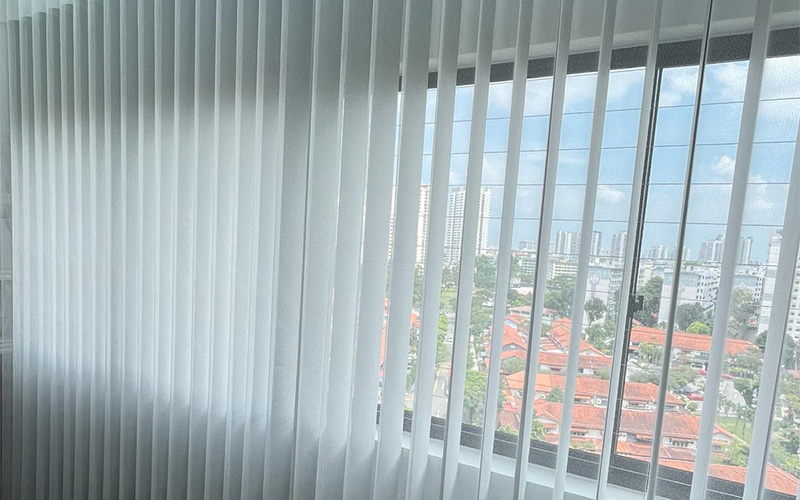
Sheer fabrics are lightweight and translucent, allowing natural light to pass through while softening visibility between spaces. They provide a gentle layer of separation that maintains brightness and openness within the room.
Many homeowners prefer a layered approach. Combining sheer and blackout fabrics helps the divider to adapt throughout the day. The sheer layer preserves openness during daylight hours, whereas the heavier layer can be drawn for privacy when needed.
Fabric weight and opacity should always match the intended use of the divided space. Areas intended for sleeping typically benefit from thicker fabrics that provide greater coverage and privacy. In contrast, spaces such as reading corners or lounge areas may only require lighter fabrics that create subtle visual separation.
The structure of the folds, the way the curtain stacks, and the overall visual profile can influence whether the divider feels intentional or simply functional. Selecting the right curtain style helps ensure that the divider complements the room’s design.
Ripple fold curtains are popular in modern interiors. Their continuous wave pattern creates a clean and consistent appearance, allowing the curtain to stack neatly when opened. This style works well in contemporary HDB flats and condominiums where simplicity and smooth operation are valued.
Pleated curtains offer a more structured and defined appearance. Their evenly spaced folds create a sense of order and visual depth, making the divider appear more deliberate within the room. This style can give the curtain a fuller and more substantial presence when used to separate different areas.
Full-height curtains are often recommended for room separation as they extend from the ceiling to the floor. This full-height coverage helps visually define the separated area and gives the curtain divider a more purposeful presence within the room.
The curtain track system plays an important role in how effectively a curtain divider functions in everyday use. A well-planned track allows the curtain to glide smoothly, stack neatly when opened, and provide full coverage when closed.
Ceiling-mounted tracks are commonly used for room dividers as they create a seamless and built-in appearance. By positioning the track along the ceiling line, the curtain appears to extend naturally from the room structure.
Track layouts can also vary depending on the space and how the divider is intended to function. Straight tracks are commonly used for simple room separations where a clear boundary between two areas is required. They provide a clean, direct line that works well for dividing sleeping areas, shared bedrooms, or home office corners.
Curved tracks, on the other hand, offer greater flexibility in adapting to different room layouts. They can follow architectural features, wrap around furniture, or create softer transitions within open areas. This type of track is often used when homeowners want the divider to feel less rigid and more integrated with the flow of the room.
Proper alignment is important to ensure smooth movement and neat stacking when the curtain is opened. Even small measurement inaccuracies can result in uneven coverage or visible gaps. This is where made-to-measure curtains become particularly valuable. Professional site measurement helps ensure that curtain tracks, fabric width, and stacking space are accurately planned for the specific room layout.
One reason curtains work well in Singapore homes is their ability to balance separation with comfort. Unlike solid partitions, curtains enable light and air to circulate when opened. This helps maintain ventilation, which is essential in Singapore’s warm and humid climate.
Meanwhile, layering different curtain fabrics can provide additional control. With sheer layers, daylight can filter through softly. Heavier fabrics can be drawn when privacy or sun control is required.
For curtain dividers to feel integrated rather than improvised, they should be treated as part of the room’s overall design.
Neutral tones often blend more easily with different interior styles as they complement a wide range of colours, materials, and furnishings. Textured fabrics, on the other hand, add visual interest through subtle surface variation to introduce depth and character.
Patterns should be used carefully, especially in compact apartments. Large or busy prints may make the space feel visually crowded. Simpler designs usually maintain a calmer and more cohesive appearance.
Full-height curtains also help create a stronger sense of proportion within the room. When the curtain extends from the ceiling to the floor, it emphasises the vertical height of the space and allows the divider to feel more intentional.
In many situations, using curtains to divide a room can be a more practical choice than building permanent walls. Family needs can change over time. A study area may later become a nursery, or a guest corner may be required only occasionally. Curtains allow spaces to evolve without requiring structural changes.
Renovation restrictions can also influence this decision. In some HDB flats or rental properties, building permanent partitions may not be practical or permitted. Curtains provide an alternative that works within these limitations.
Cost and installation time are also important considerations for many homeowners. Curtains typically require significantly less time to install compared to renovation works that involve carpentry, partition building, or structural alterations. Installation is generally more straightforward and can often be completed with minimal disruption to daily routines.
For many homeowners, using curtains to divide a room provides a practical balance between privacy, flexibility, and design. When carefully planned, divider curtains can look intentional and refined. Fabric choice, track placement, and accurate measurement all contribute to a result that integrates naturally with the surrounding interior.
For those exploring this approach, Jia Le Curtains and Blinds offers consultation, site measurement, custom-made curtain fabrication, and installation services. Our range of curtain styles and materials helps create tailored solutions that match the home’s layout and daily living needs in Singapore.
Contact us to discuss window treatment options for your space.